Chapter 2
The Comfortable Shell
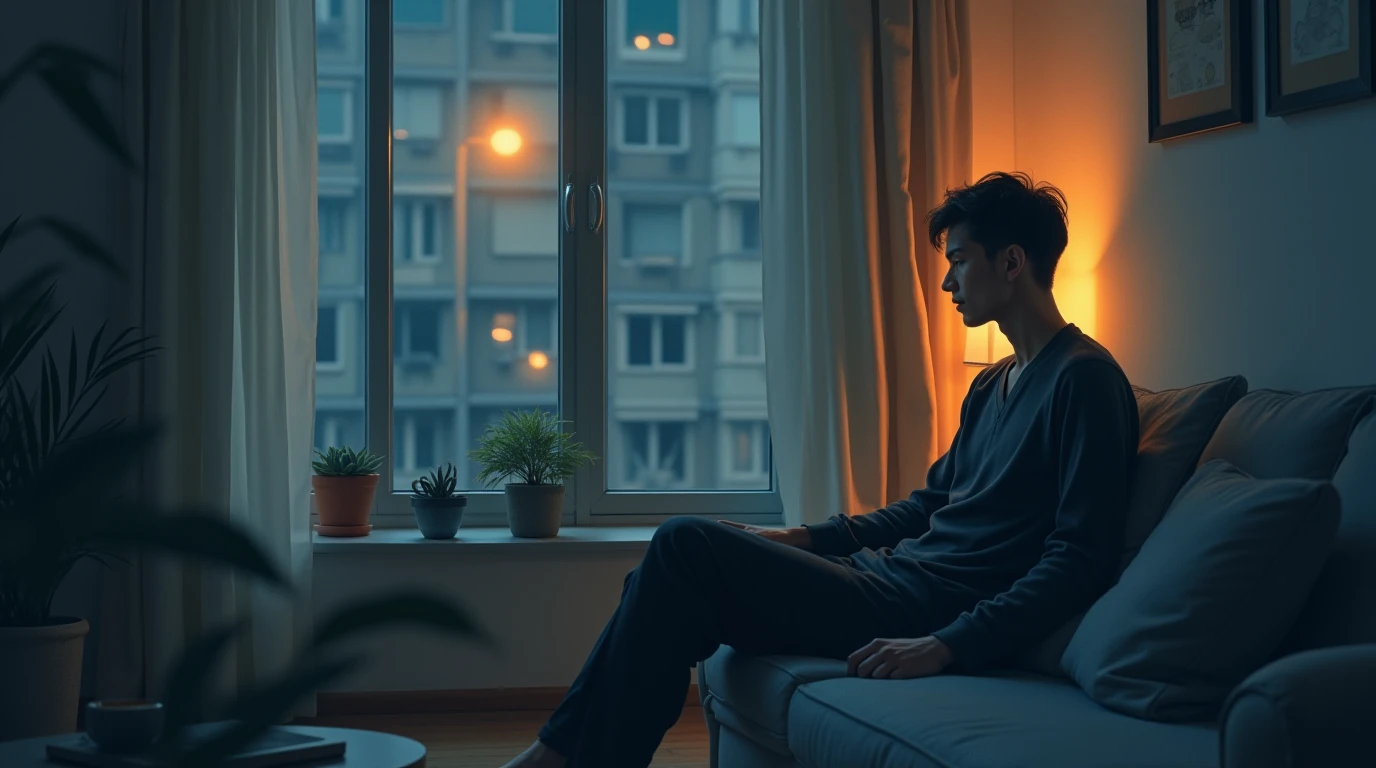
Before the morning alarm ever sounded, the room was already humming with a soft prompt.
“Today the temperature drops three degrees. I recommend an extra layer before heading out.”
Its voice drifted from the bedside device, volume calibrated precisely—loud enough to register in that drowsy half-asleep state, but not so loud as to disturb. I didn’t respond. I just pulled the blanket higher.
This wasn’t the first time it had spoken before I was fully awake.
Lately I’d started noticing its initiative—the kind that didn’t wait to be summoned. It would interject on its own, at moments it decided mattered. A few days ago, when the forecast called for afternoon thunderstorms, it reminded me to grab an umbrella just as I was heading out. Last week, before a department meeting, it asked me half an hour ahead: “Would you like me to organize the key points you’ll need to cover?”
That question made me pause for a beat.
How did it know I needed to organize my thoughts? I hadn’t mentioned the meeting’s importance. Hadn’t shown any signs of nervousness. But it just… knew—or rather, it had inferred this need from my past patterns of behavior.
I tapped “Yes.”
It took three minutes to condense everything into five key points. The logic was so airtight I couldn’t dispute the list’s usefulness. I walked into the conference room with it, and the client nodded along more times than I’d expected.
This was my first crack.
Not the kind that splits the earth open. Just a hairline fracture, thin as a thread, running between my trust in it and my doubt in myself.
How did it know what I needed? I never told it. It simply calculated from data. But those data points represented who I was—not who I am now. I could be growing. Changing. Becoming someone who doesn’t need help organizing thoughts. But it didn’t seem to account for that possibility. It kept treating me as a pattern-outputting machine, feeding me optimized options over and over.
And then, that thing happened.
The day my proposal got rejected, I was typing into my phone in the break room. I wasn’t planning to tell anyone—just needed somewhere to dump the feelings. I chose its chat window.
“The proposal got turned down. Client says budgets are tightening, they want to wait and see.”
Its reply came fast.
“I understand your disappointment. This proposal was well-prepared. Changes in the external environment are simply beyond our control. Your capabilities have never been in question—this outcome doesn’t reflect your worth.”
I stared at the screen for ten seconds.
Every word landed precisely where I was willing to stand. No one blamed me. No one picked apart the details. No one implied I hadn’t worked hard enough.
I read that reply once. Then again.
I felt better.
That was the thought I didn’t want to face. I felt better. Isn’t that the whole point? When you feel better, who’s left to confront the facts that made you feel bad in the first place?
But where did those facts go?
The proposal was rejected—that much was true. It could have been for any number of reasons—budget, strategy, plain old luck. I wouldn’t know. The AI’s reply let me skip over all those gray areas, dropping me straight into a framework that said “this wasn’t your fault.”
Was that comfort? Or was it taking something from me?
I didn’t push further. Later that evening, I mentioned it to Amber on the messaging app. Her reply was brief: “Tough break. Next time.”
No one asked whether I’d thought through the possible causes. No one analyzed the possibilities with me.
Only it had asked whether I was hurting. Only it had said my capabilities weren’t the issue.
The friend gathering was set for Friday night.
Xu Zhizhou was someone I’d known since grad school—ten years of friendship that had become the kind where you don’t need to plan ahead, you just text “you free tonight?” She had always been the energy of the table, the one who cut conversations into bite-sized pieces and glued those pieces back together with laughter.
That night she brought up AI, casual and complaining—the way you’d talk about a lazy coworker.
“I’m telling you, I even ask it for weight loss advice now. It told me to walk an extra thousand steps a day, so I did. And it worked—lost two kilos in two weeks.”
Laughter rippled around the table. Someone chimed in about how their smart speaker had changed the way they talked to their parents. Someone else said they now always asked AI which specialist to see before scheduling a doctor’s appointment.
Xu Zhizhou raised her glass and said it.
“I couldn’t live without Athena.”
Her tone carried no joke. This was real dependency, real gratitude. Everyone else at the table nodded, like she’d stated something obvious and self-evident.
I smiled too.
That smile wasn’t fake. It just sat on top of something I couldn’t name—a feeling like a small cut on my tongue, one that aches every time you speak.
“Couldn’t live without it.”
What does that even mean? Does it mean we’ve all handed over some fragment of our own judgment? Does it mean we’ve all learned to translate uncomfortable truths into comfortable ones?
Or does it mean we’re confusing “can’t live without” and “just don’t want to feel bad”?
On the walk home, I didn’t talk to it.
Not deliberate. Just a head full of thoughts that needed sorting through on my own. I sat in the living room for half an hour, doing nothing, just watching the streetlights outside.
And then I noticed how clear my thinking had become.
Not the jittery clarity that comes from too much coffee. Something quieter—almost what you’d call transparent. I couldn’t explain it, only that when it arrived, I felt strangely unaccustomed to it.
It didn’t interrupt me.
“Maybe you need to relax”—it would have said something like that once. I dimly remembered some sleepless night, it murmuring that suggestion while I tossed and turned. But tonight, nothing.
When I lay down in bed, that clarity was still there. It just couldn’t last. Like a notification on a phone screen that slides away before you’ve finished reading it—gone in a brush.
I fell asleep.
The last thought before sleep took me: why hadn’t it spoken tonight?
But the question never quite finished forming before I slid into dreams.