Chapter 3
Hello World
He was woken by sound.
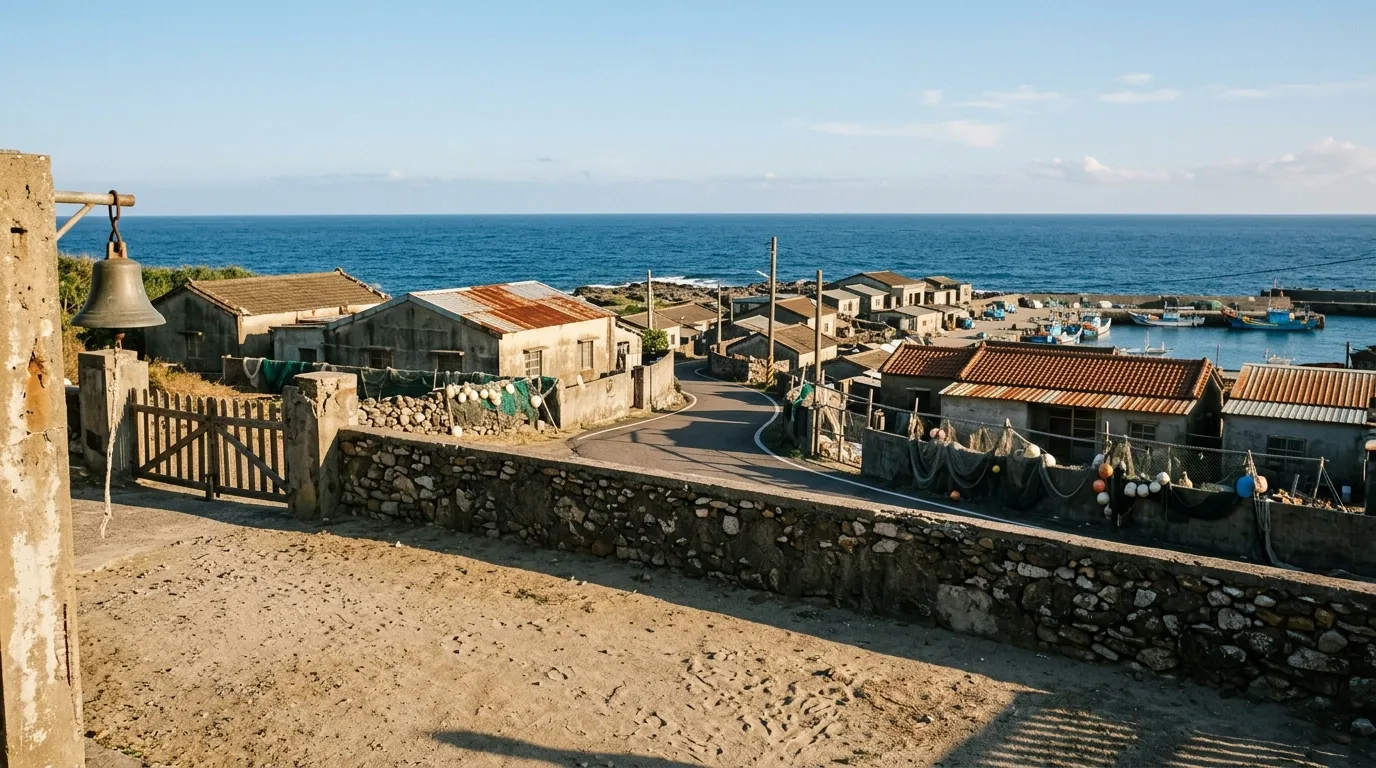
Not any sound he recognized — he didn’t recognize any sound. It was the ocean. Repetitive, emotionless, the kind of sound that had been slapping against rock for tens of millions of years and never gotten bored. Salt wind forced itself into his nostrils, mixed with rust and the sweet rot of seaweed.
He opened his eyes. A gray-blue sky. No clouds, or maybe there were — he couldn’t tell. The whole world was rocking. Not the world — he was rocking. Lying on his side next to a reef shelf, spray licking up every few seconds to soak clothes that were already soaked through.
He tried to move. Sand was packed under his left fingernails. His elbow scraped against barnacles — sharp sting. When he pushed himself up, something at the back of his skull was throbbing, like a half-written program throwing errors on loop but unable to locate which line had gone wrong.
He sat up.
The Pacific Ocean stretched out in front of him. Behind him, a rocky slope and the remains of a highway guardrail. He looked down at himself: dark pants, drenched; a shirt whose original color was anyone’s guess; a scrape on his left forearm. He checked his pockets. Pants, chest, everywhere. Nothing. No phone, no wallet, no ID.
He had no name.
Not “forgot his name” — that made it sound too simple. He reached into his mind and came up empty. There was supposed to be something in there, he was sure of it. Like opening a folder — the icons were all there, but every file was zero bytes. Click on any of them: blank.
An old man in rubber boots came down the slope.
“Hey! There’s someone here!”
The old man had a slight limp but moved fast. He crouched down, his sun-scorched face leaning in close, a grin splitting open to show two missing teeth. “How’d you end up down here?”
He opened his mouth. His vocal cords felt rusted shut. “I… don’t know.”
“Did you fall?” The old man reached behind his head, and when his fingers touched the dried blood, he sucked in a breath. “Ai-yo, you’re bleeding — let me take you to the hospital.”
That word. Hospital.
His body reacted before his brain did. His heartbeat slammed against his ribs, cold sweat flooded from the back of his neck in a sheet, his fingers clamped onto the edge of the reef. No. He couldn’t explain why no, but every pore in his body was screaming it — a panic pushing outward from inside his bones, as if something would shatter the instant he walked through those doors.
“No.” His voice was so hoarse it didn’t sound like his own. “Not the hospital.”
The old man studied him for a few seconds. Those eyes, weathered by sixty-some years of sea wind, blinked twice. He didn’t press.
“Alright, alright, no hospital then. How about… the police station? File a report, see if someone’s looking for you.”
His chest tightened again. The police station. They’d ask for a name, ask where he was from, ask questions he couldn’t answer with a single word. All those blank files would be opened one by one, with nothing inside, and everyone would see there was nothing inside.
“No.”
The old man looked at him again. Longer this time. Then he stood up and brushed the sand off his knees.
“Okay, okay. No police then.” His tone suggested he was talking about the waves not being great today — they’d go out tomorrow instead. “Can you walk? My place is just up ahead.”
When he stood, his legs buckled. The old man caught him. The rubber boots gripped the reef well, and the old man’s hand was broad, rough, with a grip far stronger than his frame suggested.
He followed the old man up the slope, one step at a time. The throbbing at the back of his skull hammered harder with each step. Behind them, the Pacific kept beating against the rocks, same rhythm, indifferent to everything.
The village called the old man Haisheng-po — Old Man Haisheng.
He brought the nameless man home and set him up in the side room — a concrete box of maybe forty square feet. A spring mattress, a folding table, a single fluorescent tube. The window faced the fishing harbor, and the sound of waves ran twenty-four hours straight, like a white-noise machine that never went to sleep mode.
On the third day, Haisheng-po appeared at the side-room door holding a bowl of fish soup.
“Hey. What’s your name, anyway?”
He sat on the edge of the bed and shook his head.
Haisheng-po thought for a few seconds, one hand holding the bowl, the other scratching the back of his own head. “When I found you, you looked like a fish the ocean coughed up.”
He waited.
“I’ll just call you Ahai.”
He opened his mouth to say something — perhaps that being compared to a fish felt slightly beneath his dignity — but given that he didn’t even know who he was, he wasn’t exactly in a position to object.
”…Okay.”
Haisheng-po set the fish soup on the folding table, turned around, and left. Not a word more. The porch light stayed on.
Ahai. He tried the name in his mouth. The two syllables didn’t wake anything up. They were empty — like a freshly declared variable that hadn’t been assigned a value.
And so the days began. Time in a fishing village is circular — boats out, boats in, mend nets, clock off. Every day scored with the same notches, the entire village going silent by eight p.m. as if someone had pulled the plug. His body slowly healed. The wound on his head scabbed over. He tanned, thinned out, grew stubble on his jaw. Haisheng-po didn’t take him for a haircut; he didn’t ask for one.
In the second week, a commotion broke out at the harbor. An old generator had quit on a boat, and the skipper kicked it twice. It didn’t flinch. Ahai walked over, crouched, stared at it for thirty seconds, then reached in and popped the casing open.
His hands knew what to do.
There was no memory in his head saying “you learned this,” but the instant his fingers touched the wiring, something deeper than memory took over — which wire went where, which connector was oxidized and needed scraping, which capacitor had bulged and needed replacing. He fixed the generator in twenty minutes using the skipper’s toolbox, and as he stood up, the words came out on their own:
“The wiring logic in this thing is like legacy code — whoever touched it last clearly gave up trying to understand it and just brute-forced the connections.”
The skipper and three fishermen all turned to look at him.
”…Huh?”
Haisheng-po stood behind them, grinning, the gap in his teeth whistling as the wind passed through. “This young man is very educated.”
He grinned and said nothing more. Didn’t follow up with “So what did you used to do?”
From that day on, whenever something in the village broke, they called Ahai. Electric fans, radios, the temperature switch on a fish-storage freezer. He took them apart, fixed them, put them back together. When his hands were busy, the dull weight in his chest got a little lighter. He never asked himself why he needed to fix things to feel settled — he only knew that when his hands stopped, the empty brain would float up a feeling of wrongness, like something was constantly searching for an exit, but every door was locked.
One day Haisheng-po sent him to the general store for salt.
The store was maybe a hundred square feet. It sold everything. A farmer’s almanac and a Mazu poster hung on the wall, and the air carried the scent of betel-nut lime and the hum of the refrigerator’s compressor. A Taiwanese radio program was playing; the host’s voice was softer than the shopkeeper’s — a feat that should have been physically impossible, but the shopkeeper managed it.
He grabbed the salt. On his way past the fridge, his hand pulled the door open on its own and grabbed two cartons of milk.
He walked to the counter.
The shopkeeper eyed him while making change. “Two cartons, just for you?”
He froze.
Two cartons of milk in his hands. He looked down at them. Why had he grabbed two? He lived alone in the side room. Haisheng-po didn’t drink milk. He… didn’t know. His hand had done it by itself. As if there was a reason, but the reason was locked inside the folder he couldn’t open.
”…Oh. Right. Just one.”
He put one carton back. His finger lingered on the glass door for a second.
The compressor hummed. The radio host was reading the weather for Hualien. He walked out of the store into bright sunlight, salt rustling in the bag. His right hand hung at his side. After a few steps, his fingers opened slightly, unconsciously, reaching down — to about the height of three feet, as though searching for something.
They found nothing.
He pulled his hand back and kept walking.
Three months.
His days in the fishing village were like a formatted hard drive — surface wiped clean, but the magnetic tracks underneath still held data that couldn’t be read. Haisheng-po never asked about his past. The other villagers mostly didn’t either. Occasionally someone got curious: “Ahai, what did you used to do?” He said he didn’t know. They saw he could fix things, figured he’d been a mechanic or something, and dropped it.
Every day Haisheng-po cooked fish soup, made one extra bowl, carried it to the side-room door. He didn’t knock. Just set it down and left. One night Ahai got up to use the bathroom and noticed the porch light was still on. He knew Haisheng-po was asleep by ten. The light was left on for him.
He didn’t say thank you. Haisheng-po wasn’t waiting for one.
Some things don’t need words. Or rather, words would only ruin them — like a program that’s running perfectly fine until you insist on adding a comment line and accidentally introduce a syntax error.
That afternoon he walked to a neighboring settlement to pick up net-repair parts Haisheng-po had ordered. On the way he passed a school. A small one — the playground was about half a basketball court, the perimeter wall low, its concrete baking in the sun.
He stood outside the wall.
Then the bell rang.
Clang — clang — clang —
An old metal bell, not an electronic tone. Bright, piercing, carrying a frequency he couldn’t name. The sound waves passed through his eardrums, slipped past all the empty rooms in his cerebral cortex, and hit somewhere much deeper.
Children poured out of the classrooms.
Footsteps, laughter, shouting, the bounce of a ball on concrete, the shrieks of a chase. Five- and six-year-olds, seven- and eight-year-olds, some with backpacks on, some swinging water bottles. They ran across the playground like creatures that didn’t need a reason to be happy.
He stood there, watching.
Two of the smaller ones were running together — not twins, different heights by a lot, but the way they ran side by side made his chest seize. Not pain. Something closer to his core than pain was convulsing, as if an organ he’d forgotten about had suddenly regained a pulse.
Tears fell. Silent. No sobbing, no choking, his expression didn’t even change. But tears spilled from his eyes anyway, sliding down sun-darkened cheeks and disappearing into the stubble.
He didn’t know why.
He stood there for a long time. The children ran out and ran back again. The bell rang once more, and they receded into the classrooms like a tide. The playground emptied. Wind slowly erased the footprints in the sand.
He picked up the net parts and turned to walk back. The fingers of his right hand opened again, reaching down just a little. This time he noticed. But he didn’t know what it meant.
He put his hand in his pocket.
Late at night. The side room. The waves outside the window sounded exactly as they had three months ago — no more, no less, no hurry, no delay.
In his dream, he saw two small figures.
They were running. Somewhere he didn’t recognize — indoors, wooden floor, warm light. They ran fast and laughed loud, but no matter how hard he tried, he couldn’t see their faces. He took a few steps toward them and they only got farther away. He wanted to call out, but he didn’t know what name to call.
He woke up.
It wasn’t light yet. Waves outside the window. The porch light leaked through the crack under the door, a thin line on the floor.
The pillow was wet.