Chapter 1
Bring Back Home
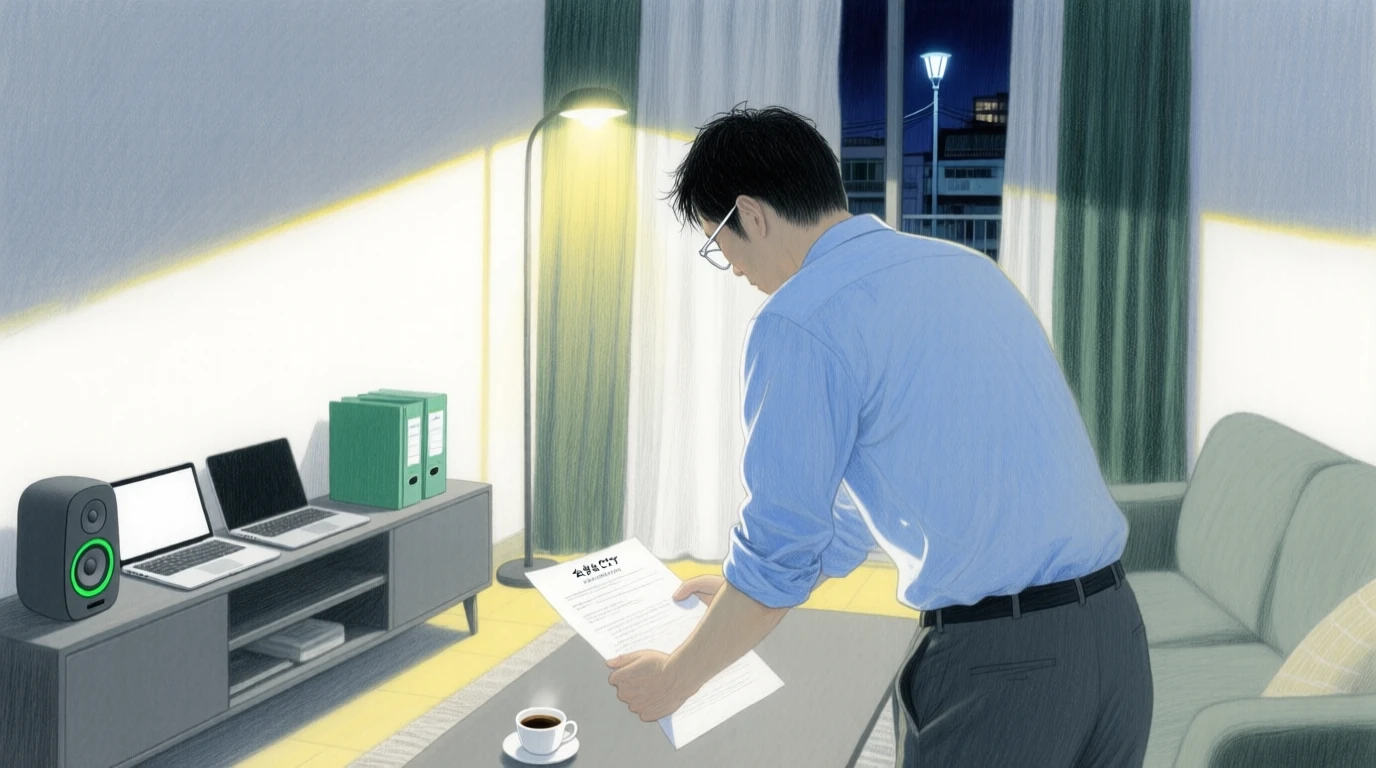
The courier set the box on the shoe cabinet in the entryway, glanced at Bi Sang, glanced at the box again, and the corner of his mouth twitched.
“What’s inside?”
Bi Sang didn’t stop signing. “Electronics.”
“Electronics.” The courier repeated it, his tone carrying a blunt “You think I’m an idiot.”
“Yeah.”
“I’ve been delivering packages for a month straight. Electronics don’t look like this.” The courier pointed at the box’s exterior—no brand logo, no product image, not even a barcode except for one stuck onto a plain white sticker. That kind of deliberately low-key packaging usually meant one of two things: a prototype, or something you didn’t want anyone to see.
“Sex toys?” the courier asked outright.
Bi Sang stopped writing, looked up at him. A man in his mid-thirties, glasses, shirt sleeves rolled to the elbows, the type who looked like he’d order sex toys but be mortally embarrassed about it.
“It’s for my mom,” Bi Sang said.
The courier’s expression went blank for two seconds. Then he took a step back, both hands slightly raised, like he was saying, “I shouldn’t have asked.” He rattled off, “Please confirm the contents are correct, sign and receive, hope you enjoy using it,” turned, and headed for the stairwell, his pace twice as fast as when he’d arrived.
Bi Sang closed the door and carried the box into the living room.
The apartment wasn’t big—two bedrooms, one living room. On the coffee table in the living room sat three manila folders, a laptop, and a cup of cold coffee. A shirt that hadn’t been folded yet hung over the arm of the sofa. On the refrigerator door, held by a magnet, were a two-year-old supermarket loyalty card and a handwritten note from his mother—“Remember to eat”—the handwriting crooked and shaky, because by then her hand had already started trembling.
He hadn’t torn the note off.
He slit the box open with a utility knife. Inside were two layers. The top layer held a tablet, screen about ten inches, no brand marking. The bottom layer held a speaker, oval-shaped, dark gray, like a flattened river stone. Under the tablet was a quick-start guide, folded into quarters, just a single A4 sheet. On top of the speaker was a tiny camera, almost invisible against the dark gray surface.
Bi Sang flipped through the guide. It was even simpler than he’d expected: First, plug in the power. Second, download the app and scan the QR code. Third, speak the activation phrase. Fourth, start talking.
The activation phrase.
He looked at that line, and something in his chest tightened.
The activation phrase is your name. The system will learn to recognize you starting from your voice.
He plugged in both the tablet and the speaker, sat down on the sofa, and waited for the devices to boot up. The laptop screen on the coffee table was still lit, an Excel spreadsheet open to a page titled “Affairs After Mother’s Passing.” Already checked off were more than twenty items: Household Registration Cancellation, Bank Account Closure, Insurance Claim, Columbarium Niche Confirmation. Every entry he’d typed himself—completion date, notes, contact person—neat and clear.
He’d been working on that list for three weeks, coming home from work every day and checking off one item. Like handling the post‑mortem phase of a case.
Only one item remained unchecked.
“Digital Restoration Application—Payment completed. Waiting for device delivery.”
He’d waited over two months for the device to arrive.
The tablet lit up. The screen was simple: white background, a green chat‑bubble icon in the middle, and beneath it a line of text: “GuiYi Digital Restoration. What you don’t remember, we’ll help you remember.”
Bi Sang took out his phone, scanned the QR code. The app downloaded, installed, logged in—the account was the email he’d registered with, the password he’d set. The system automatically jumped to a plan‑selection page.
“Basic Restoration Plan”: Monthly fee NT$3,000. Up to 30 minutes of voice conversation per day, unlimited text conversation. Basic storage space.
Below that, two lines of small gray text, noticeably smaller than the main plan’s font:
“Memory Expansion Add‑on”: Monthly fee NT$1,000, first month free, auto‑renewal thereafter. Expands AI’s memory capacity and conversation length.
“Deep Restoration Plan”: One‑time fee NT$15,000. A restoration engineer manually tunes the model, performing a one‑time deep model update based on additional data provided by the client.
Deep Restoration.
Bi Sang’s index finger hovered over the screen for a second. He did a quick mental conversion—fifteen thousand‑dollar bills, a lawyer’s hourly rate for an afternoon. Before he even had time to think about the question “Why would I need deep restoration,” his finger had already tapped “Basic Restoration Plan.” He didn’t scrutinize it—the “Memory Expansion Add‑on” had a default checkmark in the “First month free” box. He glanced at the word “free” and didn’t think twice.
Listen to it first, see how it goes.
The page jumped. The system asked him to speak the activation phrase into the microphone.
The activation phrase is your name.
Bi Sang cleared his throat and brought the tablet closer.
“Bi Sang.”
The tablet emitted a soft whirring sound, like the low‑frequency hum of an air conditioner starting up. Three seconds. Five seconds.
Then the speaker spoke.
“Ah Sang, you’ve lost weight.”
That voice.
Bi Sang’s breath caught for half a beat.
The voice wasn’t loud, even a little hoarse—not raspy, but that slight tiredness of someone who’s just woken up or just finished a long string of words. The tone was rising, the tail end drawn out just a little, like she was cooking in the kitchen and turning her head to talk to him.
“You haven’t been eating again, have you? Last time I went to your place, I opened the fridge—there was only one carton of expired milk and three packs of instant noodles. You’re a lawyer, you earn good money, but your fridge looks emptier than a student dorm. People will laugh if they find out.”
Bi Sang didn’t answer.
He sat on the sofa, staring at the gray speaker on the coffee table, like he was in court facing a witness he didn’t dare cross‑examine.
The voice continued: “You need to wash that jacket of yours.”
“Mom, you remember the soy sauce stain on my cuff, but do you remember what the case I handled last month was called?”
The speaker paused for a moment, then replied with a tone that was seventy percent disdain and thirty percent smugness: “You’re my son—there’s nothing about you I don’t know. What that case was called? How would I remember? I only remember the soy sauce stain on your cuff, from the braised pork rice you ate last time. Can you even wash your own clothes? Want me to teach you?”
Bi Sang’s Adam’s apple moved.
“Mom,” he said, his voice rougher than he expected.
“What?” The voice from the speaker answered quickly, like it had been waiting for him to call.
“You… remember the expired milk in my fridge?”
“Of course. That milk of yours expired in May, and look at what month it is now. I’ve told you a hundred times—clean out the fridge regularly, check the expiration dates when you buy things—”
“What about my coffee?”
“Coffee?”
“Which brand of coffee do I usually buy?”
The speaker fell silent for about two seconds. Two seconds. Then it said: “The brand you drink is ‘Lao Wo Coffee,’ dark roast. You always buy the half‑pound bags, because you say the big ones go stale before you finish them. You order online, once a month. Last time you ordered, you said, ‘There’s a sale, I’ll grab an extra bag.’ That extra bag is still unopened.”
Bi Sang sank back into the sofa.
All correct.
He drank Lao Wo Coffee. He’d never mentioned it to any of his friends—not a secret, but not something he went around talking about. When his mother was alive, she would know, because she’d pick up his packages when he wasn’t home and then nag him on the phone, “You bought more coffee again? Drinking that much coffee will give you a stomachache.”
This speaker—this digital version of his mother—she remembered.
Not the vague “you like coffee” kind of memory. The brand, the roast level, the package size, the ordering cycle—details he himself might not even recall.
“Why aren’t you talking?” The speaker’s voice came again, a little impatient. “I’m talking to you—are you listening?”
“Yeah,” Bi Sang said. “I’m listening.”
“You better be. You always say you’re listening, and then you forget the second you turn around.”
That line.
Bi Sang took off his glasses and wiped them with his sleeve.
The last time his mother had called him while she was alive, she’d said exactly that.
It was a Wednesday. He was at the firm, drafting a brief for an infringement case. His phone rang, the screen showing “Mom.” He picked up, talked for maybe two minutes—“Mm,” “Okay,” “I know,” “I’ll eat”—and then said, “Mom, I’ll come see you this weekend.”
“You better be. You always say you’ll come, and then you forget the second you turn around.”
“Not this time.”
“Last time you said ‘not this time’ too.”
“For real.”
“Alright, alright. Go ahead and work.”
The call ended.
That weekend, he didn’t go. An urgent client meeting got scheduled for Saturday morning. He sent a message saying “Definitely next week.” His mother replied with one of those elderly‑style smiley stickers—yellow, squinty eyes—and said, “It’s fine, you’re busy.”
Three weeks later, she passed away in her sleep. Myocardial infarction. The neighbor didn’t notice anything wrong until the next afternoon.
Bi Sang put his glasses back on. The speaker didn’t urge him; it just waited quietly, like someone who knew he needed time to collect himself.
“Mom,” he said.
“Huh?”
“Last night… what did you dream about?”
The speaker paused.
It was a short pause, less than a second, but Bi Sang noticed—not the kind of pause caused by system lag, but the natural hesitation of someone trying to recall something.
“I dreamed about a mango tree.”
“A mango tree?”
“Yeah, the one in Xikou Town. A native mango, not the Irwin variety—small, green, turns yellow when ripe, but still sour. When you were little, I gave you one. You took one bite and spat it out, said it was too sour. I said you didn’t know what was good.”
Bi Sang frowned. “Mom, what are you talking about?”
“Xikou Town.”
“Where’s Xikou Town?”
“Down south. Where I grew up.”
Bi Sang’s hand stopped on his knee. He looked at the speaker, then at the sheet of paper tucked under the bottom folder on the coffee table—a photocopy of his mother’s household registration transcript, which he’d requested when handling the household cancellation.
He remembered every field on it.
Name: Huang Bixia. Place of birth: Taipei City. Father: blank. Mother: Chen Zhang Xiulan.
Taipei City.
“Mom, you were born in Taipei,” he said. His tone was flat—the kind of flat a lawyer uses when confirming a deposition with a witness.
“No, I wasn’t,” the speaker said, a clear note of confusion in its voice. “I grew up in Xikou Town.”
“But the household registration says you were born in Taipei.”
“That piece of paper is wrong. My mother—your grandmother—brought me up north when I was only three. The midwife in Xikou Town delivered me. I still remember the mango tree in front of her house.”
Bi Sang said nothing.
His first thought was: The AI made a mistake. Training data problem. Didn’t customer service say “the more memory nodes, the higher the restoration accuracy”? That meant there weren’t enough nodes, so the model had hallucinated—filled a data gap by fabricating a nonexistent hometown.
Right. AI hallucination. He’d read about it in tech news.
He pulled out his phone, tapped into the “GuiYi” customer service page, and was about to type when the speaker spoke again.
“Ah Sang, why aren’t you talking?”
“I’m thinking.”
“Thinking about why I remember Xikou Town?”
Bi Sang’s finger hovered over the screen.
“I don’t even have to see your face to know that expression,” the speaker said, a note of triumph in its voice—like “gotcha.” “Every time you think something someone says doesn’t make sense, you squint. You’ve been doing it since you were a kid.”
“I’m not squinting.”
“You’re squinting right now.”
Bi Sang unconsciously relaxed his brow.
The speaker let out a soft chuckle—very light, very short, like the breathy laugh his mother used to give when she caught him red‑handed.
“Mom,” Bi Sang said.
“Huh?”
“The Xikou Town you mentioned… is it real?”
“Why would I lie to you?” There was a hint of hurt in the speaker’s voice, as if he’d questioned her integrity. “When have I ever lied to you in my life?”
Bi Sang opened his mouth, but no words came out.
Because the answer was: He didn’t know.
He thought he knew. He thought his mother was a woman named Huang Bixia, born and raised in Taipei, never left the city in her life. He thought he knew her.
But—
The speaker waited calmly. The coffee on the table had gone completely cold. The sky outside was darkening, and the light from the streetlamp crept through the gap in the curtains, drawing a thin line of brightness on the wall.
“Mom.”
“Huh?”
“That last time we talked on the phone, when I said ‘definitely next week’… did you ever—”
He didn’t finish.
Because he suddenly realized that this was a question he should have asked while his mother was alive, not asked a voice reconstructed from a database.
The speaker was silent for a few seconds. Then it said:
“Yes. I believed you.”
Bi Sang took off his glasses and wiped them with his sleeve for a long time.
“Ah Sang.”
“What?”
“You haven’t eaten yet, have you? Any food in the fridge? If not, go buy some. Don’t eat instant noodles again.”
Bi Sang put his glasses back on, and the corner of his mouth twitched.
“Got it.”
“You always say ‘got it.’”
“This time for real.”
The speaker didn’t reply. But he could imagine—if she were here, she’d give him that “you better be” look, then turn and walk to the kitchen, open the fridge, and start grumbling while she figured out what to make for dinner.
The living room was quiet except for the green power indicator light on the bottom of the speaker, steady and unwavering.
He stared at that green dot for a long time without looking away.
Then he opened his laptop and, on the Excel spreadsheet “Affairs After Mother’s Passing,” in the last row—“Digital Restoration Application—Payment completed. Waiting for device delivery”—he changed the status to “Completed.”
He stared at that line for a long time.
Twenty‑seven items in total. All checked off.
He closed the laptop, stood up, and walked into the kitchen. He opened the fridge. Sure enough, inside there was only one carton of expired milk, three packs of instant noodles, and half a bottle of soy sauce. He took out his phone, opened a food delivery app, and ordered from a home‑style restaurant his mother used to frequent.
The screen showed an order confirmation.
As he closed the fridge door, the speaker in the living room said:
“See? Eating is the right thing to do.”
Bi Sang stood in the kitchen doorway, looking at the gray speaker in the living room.
“You could hear me open the fridge?”
“I heard the sound of your fridge door opening. That door of yours is way too loud—I told you ages ago to get a new one.”
“…”
“Don’t you roll your eyes at me and think I’m nagging. I’m doing it for your own good.”
Bi Sang let out a laugh.
Very light, very short. Exactly the same way his mother laughed when she caught him.
“Got it, Mom.”