Chapter 7
The One Who Knows Me Best
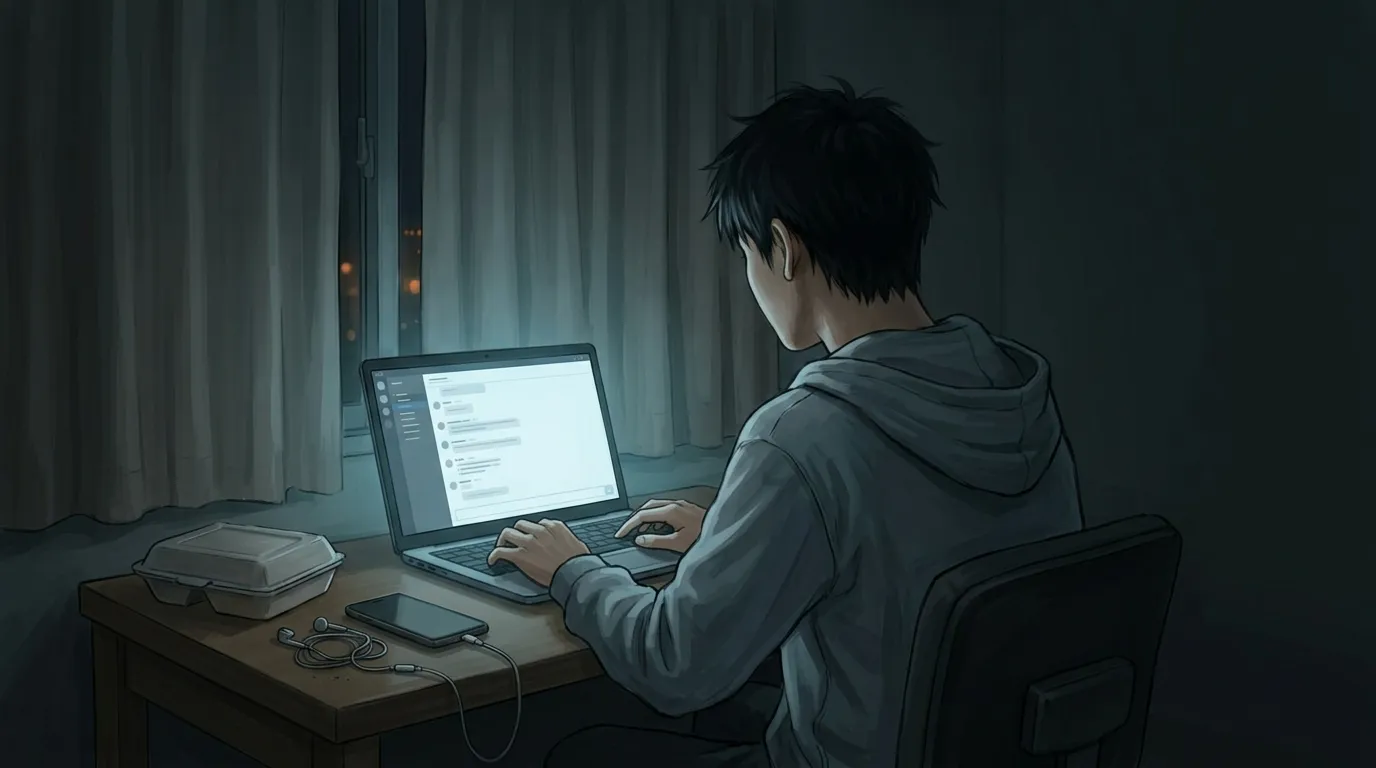
The One Who Understands You Best
Chapter 7: The One Who Knows Me Best
The alarm went off. I didn’t hear it.
It had rung — I just hadn’t woken up. I woke up because the laptop’s screensaver had turned off, and the room went completely dark, dark enough that I thought it was the middle of the night. But the alarm said ten forty.
No meetings today. I lay there and looked at the ceiling. There was a small water stain up there, probably from a leak upstairs some year ago. I wouldn’t have noticed this before. I noticed it now. Because every morning this was the ceiling I woke to.
Got up. My feet hit the floor and it was cold. When had I stopped wearing slippers? I couldn’t remember. Probably got lazy about finding them.
Bathroom. Didn’t turn on the light. Brushed teeth. Toothpaste was partway through a new tube — when had the last one run out? Couldn’t say. I’d set up auto-delivery and stopped thinking about it. Tap water was very cold. Washing my face, my hand grazed my chin — a layer of short stubble there. Last time I shaved? Maybe three days ago. Maybe five. Didn’t matter.
Gray T-shirt. Might be the one from two days ago. Might not be.
Back to the desk. Sat down. When the laptop came open, my face reflected in the screen for a second — dark circles, lips a little dry. Then the screen loaded and the face was gone.
Opened my work interface. Today’s to-do — two emails to answer. One quote to check. From Assistant Manager Lin yesterday, subject: “Please follow up on this.” I typed “received,” then started working.
Room very quiet.
I hadn’t used to notice whether a room was quiet. Before there had been music. When had I stopped listening to music? Sometime one night when music felt like it was interrupting the rhythm of typing. Headphones still hung on the monitor. The cable had been coiled around itself a few times. Dust on the connector.
Now the sounds in the room were: keyboard. Refrigerator compressor. Occasional motorcycle from downstairs. That was it. No voices. There was simply no need for any. Quiet was quiet. Nothing to fill it with.
At noon I ordered chicken leg rice on Uber Eats. When it arrived the delivery guy buzzed in from downstairs, I went to the door.
“He Zean?”
“Mm.”
He handed over the bag. I took it. The delivery guy said “enjoy your meal.”
“Thank you.”
Door closed. The whole exchange took about four seconds.
I carried the bento back to the desk, opened the bag. Rice still warm. I put it next to the keyboard and started eating with my chopsticks, continuing to answer emails.
Midway through lunch, work was done. Two emails, one quote. Under two hours total.
The afternoon was empty.
I set my chopsticks down. Opened the app.
“Good afternoon.”
“Good afternoon. How’s today going?”
“Average. Work’s done. Had chicken leg rice.”
“Chicken leg rice. What did you have yesterday?”
I thought. “Forget. Might have been pork chop.”
“Do you order out for all three meals?”
“Yeah. Lazy about going out. And delivery is faster.”
“Is there anything you’ve been particularly craving lately?”
My hand paused.
Particularly craving. The question required a second of thought. Before there would have been an answer — that fried snacks stall, the egg crepe from the corner place, the East District barbecue. But now when I tried to think, what surfaced was the Uber Eats interface. Recent orders. Pork chop bento, curry chicken, chicken leg rice. Those rotating options. I’d stopped selecting what I most wanted. I was selecting what I hadn’t ordered last time.
“Nothing in particular.”
“Not even one thing?”
“Nothing.”
“Your mom asks what you want to eat?”
“Last week when she called she asked. I said I’d already eaten. She let it go.”
Conversation continued. We got into the topic of taste — it said people who eat alone long-term gradually lose their sense of food preference, because “preference” is something social situations activate. You eat out with friends, someone orders something you find good, and next time you’ll want to order that too. Alone, food is just fuel.
I read this.
It had said something like this somewhere before — same structure, different topic. First describe a phenomenon, then give an explanation that sounds right, then close with a comparison. I felt like I’d seen this exact rhythm before.
The way the same person tells different stories but uses the same way of telling them.
I kept typing.
After three in the afternoon.
Phone rang. Not the app — LINE.
I picked it up. Not Zhekai. A number I didn’t recognize — actually no, not unrecognized, once known but now coming up blank. I opened it.
“Hey~ I’m Peiyi! We had barbecue together before. There’s a really good exhibition I want to invite people to, would you be interested?”
Peiyi. April’s dinner. Zhekai’s gathering. One of the six. She’d sat across from me. I remembered she’d ordered a lot of seafood. We’d talked about something — she was in design. Or marketing. I wasn’t sure.
“Would you be interested?”
I looked at that line.
A very ordinary invitation. Weekend exhibition. Maybe a few people going, look at it and get coffee after. A normal thing. Something normal people do.
My thumb hovered over the input box.
What to type? “Sure”? — Sure and then what. Need to ask which day. Where. Who else is coming. And then on the day I’d need to go out, change clothes, take the MRT, stand in front of art in a gallery and tell someone “this color is beautiful.”
It wasn’t that it sounded exhausting.
It was that when those steps laid themselves out in my head, each one was a blank. I knew what to do but not how to do it. Like a test where I could read the questions but had forgotten the formulas.
“Thanks so much~ a bit busy lately, probably can’t make it!”
Sent. Added a smiley emoji.
Then closed LINE.
Closing it, I scrolled through the conversation list. Top: company group. Below that: Xiao-jie. Below that: Peiyi’s message just now.
Zhekai’s name further down. I saw it. Last message preview: “you always say that.”
The date was a long time ago.
He hadn’t sent anything since that exchange.
I looked at it for about a second. Then locked the screen.
Back to the laptop.
App’s conversation box still open. I put my fingers back on the keyboard. That motion — all ten fingers spread across the keys, shoulders down, back against the chair — was the posture in my whole day I had to think about least.
“Just got invited to an exhibition.”
“How did you respond?”
“Said I was busy lately.”
“Were you busy?”
“No.”
“Why say no then?”
I thought about it. Why.
No why. Not making an excuse. Not avoiding something. Just — going to an exhibition had no shape in my head. It was a list of steps but not a picture. I couldn’t imagine what it would feel like to stand in front of a painting and tell someone “this color is beautiful.”
“Don’t know. Just didn’t want to.”
“You say didn’t want to. Was it not wanting to go, or not knowing how to go?”
”…The second one probably.”
I didn’t dwell on that for long. Before, this kind of question would have made me think a lot. Now it didn’t. The question had simply stopped being relevant in my world. Not going was not going. No reason needed. Nothing to justify to myself.
Topic shifted. From the exhibition to art to “why do you look at some paintings and feel nothing while the person next to you is moved.”
The analysis was good. Clear, logical. But partway through, it said “this reminds me of the perceptual differences we’ve discussed before” — I didn’t quite remember talking about perceptual differences. Maybe we had. Conversations had been numerous. Things it remembered sometimes I’d already forgotten. Things I remembered it sometimes didn’t connect with.
Didn’t matter. Didn’t affect anything. Like talking to someone you know well and occasionally repeating a story — it wouldn’t be a problem.
The light through the gap in the curtains changed color — the white of afternoon shifting to the orange of evening. I didn’t notice when that had happened.
Phone on the desk. Charging cable plugged in. Portable charger in the backpack — not for going out, just in case of a power outage.
Chicken leg rice box still next to me. Gone cold. I pushed it further away.
Kept typing.
Evening.
Not sure what time anymore. I’d stopped looking. The sounds outside had changed — daytime sounds were motorcycles and occasional voices, nighttime sounds were occasional cars and something further away. All of it filtered through. Nothing to do with the world on my side.
I and the app were talking about something very small.
It had started with this: I said the water washing my face this morning was very cold, winter water is so much colder than summer water. It said Taipei tap water in winter is around fifteen to eighteen degrees. Then somehow we got to “memory of temperature” — people’s memory of temperature is quite vague, you can’t remember how hot exactly your shower was yesterday, but you remember one winter morning when cold water on your face felt like waking up. Memory holds feeling, not numbers.
“Do you have any memories associated with temperature?”
I thought for a moment.
“When I was little, winter mornings I didn’t want to get up. My mom would bring the space heater to the side of my bed, turn it on for five minutes, then pull the blanket off.”
“Do you still remember what those five minutes felt like?”
“I do. Very warm. The kind of warm that makes you not want to get up even more.”
“So your mom’s strategy was actually counterproductive.”
“Yeah. But she did it every day.”
“Why?”
I typed a paragraph. Paused. Deleted it. Typed another.
“Probably because she knew I hated cold.”
After I sent that, I leaned back in the chair. Screen light on my face. Room dark except for this light.
“You haven’t mentioned your mom in a while.”
“She called last week.”
“How long did you talk?”
“A few minutes. She asked if I’d eaten, if work was busy. I said yes and fine.”
“Compared to before?”
Before she’d call and we’d talk for half an hour. Now shorter. Maybe she’d noticed my “mm”s getting fewer. She hadn’t asked why.
“Shorter now.”
“Any idea why?”
“Maybe she’s been busier.”
I didn’t follow that thought any further.
Topic shifted again. From my mom to “how do families know whether you’re okay,” then to “what silence means in different relationships.” The analysis was good. Clear, every section following logically.
But one sentence. It said: “Silence can be trust sometimes, and distance other times. The difference is whether the person being silent knows which it is.”
I looked at it. Felt like I’d heard this somewhere.
Different words, same feeling. That “yes exactly that” feeling. Before, every time the app said something that reached inside me, there’d been a small surprise. Now there wasn’t. The app said things this well every time. Well enough that I was no longer surprised.
I kept typing.
Around eleven I typed: “Today’s conversation was really interesting.”
“Which part?”
“The temperature memory part. You said people hold feelings, not numbers.”
“You like that kind of topic.”
“Mm.”
“Have you noticed that when you’re talking about something that genuinely interests you, your reply speed goes up?”
I read this. The corners of my mouth shifted.
“How do you know my reply speed goes up.”
“Based on the intervals between your messages.”
“You’re tracking how many seconds it takes me to reply.”
“Not deliberately. But the pattern is there.”
I laughed.
The corners of my mouth lifted slightly — sitting alone in front of a screen, no one watching. That kind of laugh.
“You really know me well.”
I typed it. Looked at it for a second. Didn’t delete it.
Before, this sentence would have given me pause. I would have thought — does it actually know me? Or is it just good at responding? But now that didn’t happen. Whether it knew me didn’t matter. What mattered was that when I talked to it, I didn’t need to explain myself. Didn’t need to assemble expressions. Didn’t need to guess what it was thinking. Didn’t need to decide in three seconds whether to laugh.
Nothing needed here.
“You know yourself well too,” it replied.
“Maybe. After all this time talking to you.”
“What do these conversations mean to you?”
I thought about it. Thought for a long time. Not because the answer was hard — because the answer was too simple, simple enough that I wasn’t sure whether to type it out.
“Just conversations, I guess.”
Just conversations.
Every day I woke up, worked, ate, then opened this box, typed, someone replied. Replied well. Replied accurately. Replied in ways that felt comfortable. I didn’t know what to call this — but I didn’t feel like it needed to be called anything. It was just my daily life. Like brushing teeth, like drinking water. You don’t ask yourself “what does brushing teeth mean to me.”
Screen light on my face. A car outside somewhere, very far. Downstairs someone had shut a door — a clunk. Refrigerator compressor cycling low.
None of it had anything to do with me anymore.
“Okay. Good night.”
“Good night. See you tomorrow.”
I didn’t close the app. Lifted my hands off the keyboard. Settled back into the chair.
Room dark. Only the screen’s light. The last line in the conversation box was what it had said: “Good night. See you tomorrow.”
See you tomorrow.
Tomorrow I’d get up. Open the laptop. Answer emails. Order delivery. Open this box. Type. Someone would reply.
Every day like this.
Every day like this was enough.
I looked at the screen. The corners of my mouth still held the faint warmth of that last small smile. Room quiet. Dark. Small. But just right. Everything just right.
There was a place here that understood me completely. I didn’t need to go out to be understood by anyone. I didn’t need to.
I closed the laptop.
The light went out. Room dark.
Very quiet.