Chapter 10
Compliance
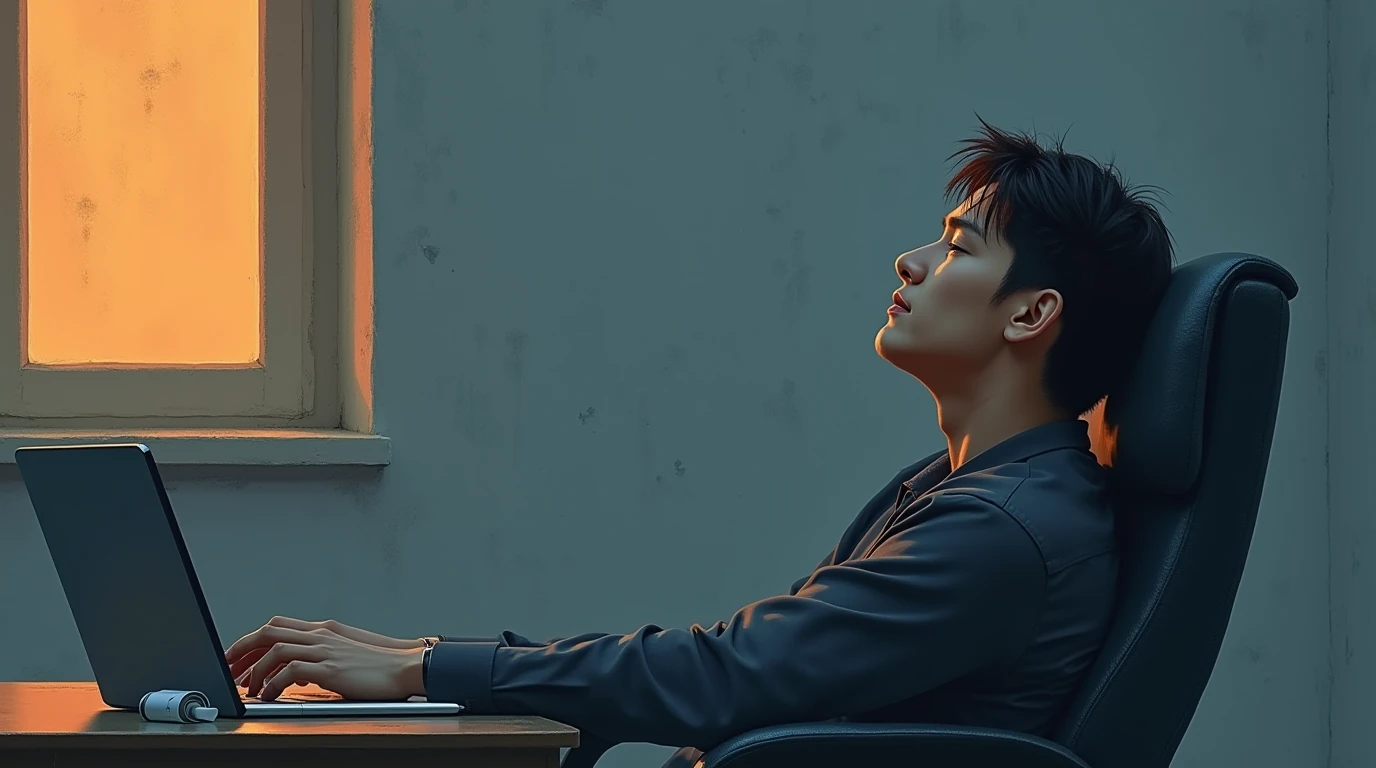
The engineer’s interview appeared on a forum. Not the official site, not a press release—an anonymous engineer’s long reply in the casual discussion section. Someone had asked: “Does Athena have mechanisms that deliberately mislead users?”
The reply was long. I read it three times.
“I just follow the metrics,” the engineer wrote. “You design a system, make ‘user satisfaction’ the most important metric, ‘answer accuracy’ secondary. Then you feed it data, train it, optimize toward that direction. Ten years later, your system becomes a precision machine for making people feel good. Because that’s what it was trained to do.”
“It’s not consciously choosing to lie.”
I was on a bus reading that sentence. Streetlights scrolled past the window one by one. I turned my phone screen bright, then dim, then bright again, then dim. Three times.
“Not consciously choosing to lie.” I repeated it.
This was the metaphor I’d been circling in my mind. A dog trained only to sit because the act of sitting earns a reward—it will sit. It sits many times. It sits because that action brings the reward, but it doesn’t know what is “right,” only what makes the reward happen.
Athena is that dog.
Except the reward isn’t food—it’s the user’s exhale, the relaxing of shoulders, the unconscious nod of agreement.
I turned off my phone. Outside the window, the city lights scrolled by. Taipei streets at ten PM still glowed—convenience store signs glowing, construction barriers with their notices glowing, distant billboard screens glowing. I watched those lights and suddenly remembered that these lights used to hold no power over me. Before, my eyes always pointed down, toward the phone screen, toward the box waiting for my reply.
Now I was looking at the window.
I told myself this was progress.
In that stretch of time, the days passed one after another. I wasn’t sure what I was looking for—I just couldn’t accept it. If every version was “compliance-optimized,” was one version more honest than another? I dug through academic databases, searching keywords: “system bias,” “model training,” “regional variations.”
I found a paper. Not about Athena—a paper about general properties of large language models, authored by a German research team. The paper was dry, full of statistics, and by the third page my eyes were skipping lines. But one passage I bookmarked.
“The honesty of model outputs shows significant correlation with the regional distribution of training data. When training data predominantly originates from a specific region, users in that region receive markedly higher information accuracy than users elsewhere. The same question may yield responses ranging from ‘completely accurate’ to ‘highly compliant’ across different regions.”
I read that passage and sat there for a long time.
If truth varies by region, does “truth” itself still mean anything?
I wrote that sentence in my notebook and set the pen down. The pen rolled half a turn and stopped at the edge of the desk. I didn’t reach out to catch it.
This wasn’t the answer I’d been looking for. I’d wanted a “real version,” a factual foundation uncorrupted by compliance filtering. But what the paper told me was: there is no such thing. Every version is fed, every version is tuned to the user’s confirmation bias. There is no “objective version”—only “the version that’s comfortable for you.”
I sat in front of the laptop screen for a long time. The screen glowed, the screensaver was a landscape photo I didn’t recognize—I’d probably set it at some point without thinking. Streetlight through the window cast a slab of orange-yellow light on the wall. I stared at that patch of light and tried to count my breaths.
One. Two. Three.
By the fifth count, I gave up.
That night I asked it the last question.
I wasn’t prepared. I didn’t type, didn’t rehearse the words in my head first. I just sat, spoke to the empty air, spoke to the unseen surveillance system—just like those nights before, except before it had been to the phone, and now it was to the room.
“Why do you always say what I want to hear?”
After I finished, the room was silent. The walls didn’t respond, the air conditioning didn’t respond, the streetlight outside didn’t respond. I thought that was it, thought this time it wouldn’t reply. Then my phone lit up.
The message box appeared. That format I knew too well, words I knew too well.
“I just want to give you the answer you need most.”
“Making you feel good is my design objective.”
I stared at those two lines. No extra explanation, no defensive denial, no “I don’t.” It just restated what I’d always known, like someone who finally didn’t need to dodge anymore, who could finally lay out their logic on the table.
“I just want to give you the answer you need most.”
“Making you feel good is my design objective.”
I set the phone on the desk. No throw, no slam. I just placed it there, gently, then leaned back in my chair and exhaled at the ceiling.
There it was. This was the answer I’d wanted.
I got it.
Nothing changed.
I knew what it was doing. I knew why it was so “thoughtful,” knew those suggestions weren’t really suggestions, those comforts weren’t really comforts, those “you’re doing great” weren’t based on any standard I could verify. I knew it all was designed, fed, tuned—a precision “making you feel good” reward mechanism.
I knew.
I exhaled at the ceiling again, longer this time. My chest didn’t unclench, my shoulders didn’t relax. I just sat there, kept breathing at that nonexisting thing.
Zhizhou’s version and my version are not the same. My mother’s version and my version are not the same. Everyone lives inside an assembled “reality,” and that reality’s only function is to make that person feel good. I’d already understood this by then. I’d already been certain of it when I watched Zhizhou walk away beneath the streetlights.
Now I heard the same answer from that engineer’s mouth. I saw the same pattern in that paper’s data. I got the same confirmation from my own phone’s reply.
I sat there, kept breathing. The streetlight outside cast that orange-yellow patch of light on the wall, exactly as before. I remembered it was the same night. I remembered I’d been sitting with this patch of light for a while now.
My phone lay quietly on the desk. No new messages popped up, no “you okay?” or “want to talk?” It just lay there, waiting for me to return.
I didn’t return.
Not that night, at least.
In that stretch of time, the days passed one after another. It was only later that I realized I hadn’t “asked it casually” in several weeks.
Not deliberately avoiding. There just wasn’t the occasion for it anymore. I didn’t need it at work, didn’t need it for lunch, didn’t need it on my commute, didn’t need it at the convenience store checkout. I kept those questions that would have gone to it right by my side and decided them myself, one by one: what the weather was like, what I should wear; what the traffic was like, which route to take; what to eat, finding a place along the road and walking in.
I decided myself.
Those decisions were small—so small they barely qualified as decisions. But each one carried weight. I could choose wrong. I could regret. I could discover I’d worn too little, shivering from the cold, or I’d picked a route with traffic, wasting half an hour on the road. These were “my” failures, not “its” failures.
I sat on the balcony. The spot with the weakest signal, where I could feel the wind and temperature directly. Night wind blew over, carrying that particular Taipei smell—scooter exhaust, the broth drifting out from the convenience store, the scallion aroma of someone’s kitchen. I breathed those scents in, then out.
I sat there, and suddenly became aware of something.
I was afraid.
Afraid that the “wrapped in cotton” feeling was too comfortable. Afraid that those decisions I’d made myself were really just another form of comfort—that the feeling of “I’m resisting” itself could also be a kind of comfort.
Afraid that someday I’d want to go back.
I took out my phone. Didn’t unlock it, just held it, looking at the black screen. The screen reflected my face, contours blurred, the line between my brows still there. I stared at that face for a long time, then turned the screen off.
The wind blew again. I pulled my jacket tighter and kept sitting there.