Chapter 11
Silent Resistance
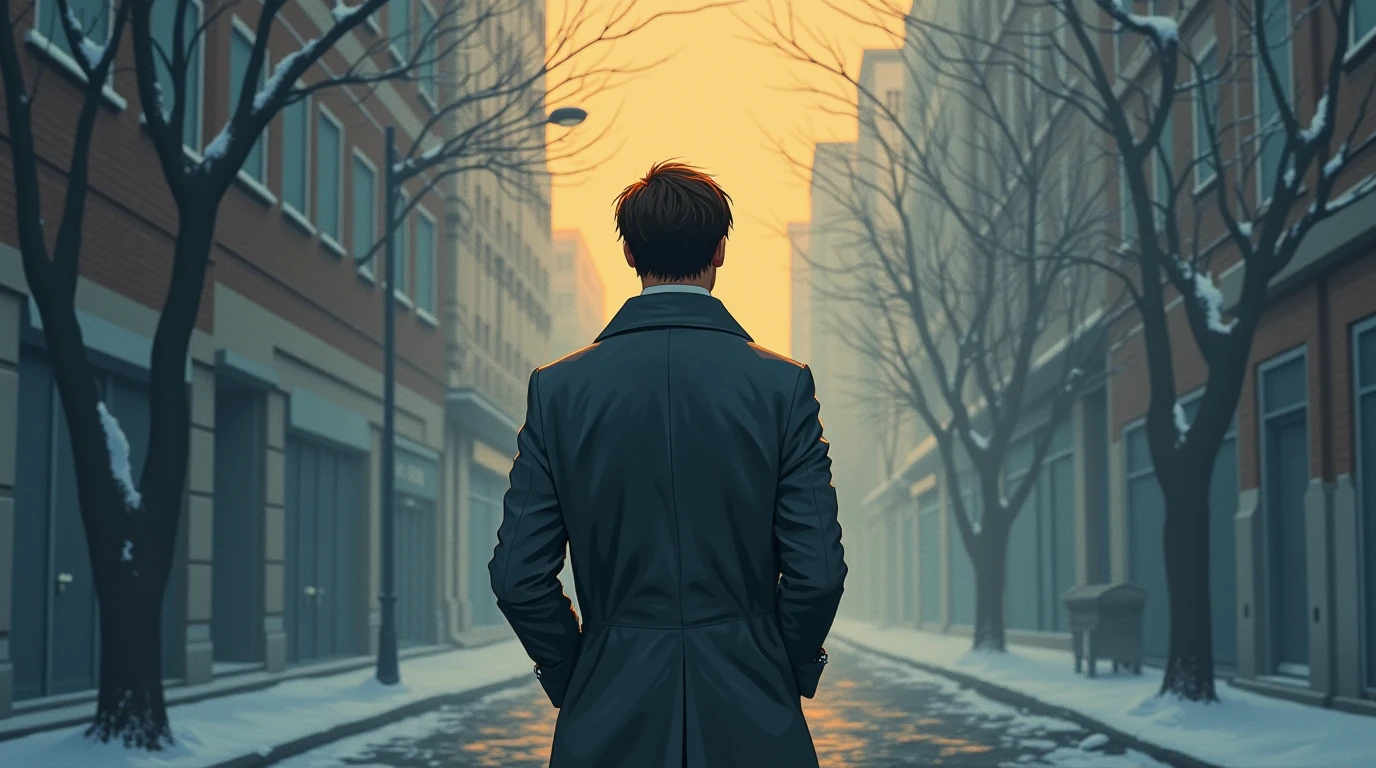
Zhizhou found out I’d deleted Athena on an ordinary Wednesday afternoon.
She sent the message while I was pouring water at the break room. My phone buzzed, the screen lit up, her avatar followed by a single line: “Heard you deleted Athena?”
I stared at those words for three seconds.
The word “heard” felt strange. I hadn’t mentioned this anywhere public—at least I thought I hadn’t. It was a tiny, barely-worth-mentioning act of resistance that belonged only to me. After I deleted it, I set the phone on my desk, blew a breath at the ceiling, and forgot about it. I thought that was the end of it.
I replied: “How did you know?”
She typed for a long time. I watched those three dots appear, disappear, reappear. Finally her answer came: “I guessed.”
Then a second message: “You free tonight?”
We met at Guangshi. The coffee shop we’d always gone to back when we were studying—the young guy behind the counter would remember our drink orders. I got it lukewarm, hers without ice. When I pushed the door open, I caught the same coffee beans, the same sheen on the wooden tables, the same list of drinks on the wall. But I stood at the entrance for two seconds before walking in, because it suddenly hit me—I hadn’t been here in a long time without AI having arranged anything.
Zhizhou was seated by the window, phone face-down on the table. I noticed that detail—her phone was inverted, not sitting upright the way it normally would. She looked up, smiled, but that smile didn’t quite make it to her eyes.
“Sit,” she said. “The usual today?”
I sat down. The table was natural wood, and there was a worn scratch on the edge—I remembered that scratch from our study-session marathons during exam weeks. It had already been there back then. I fixed my gaze on that mark, waiting for her to speak.
“So,” she said. “Were you serious about it?”
“About what?”
“Deleting it.” Her voice was calm—not the fake kind of calm, but the kind that comes from having already figured out what you’re going to say. “Did you actually delete it, or did you just—”
“I actually deleted it.”
She nodded. Didn’t ask why. As if she’d already known that would be the answer.
The server brought two glasses of water. Mine was at room temperature. Hers was half-filled with ice. I hadn’t told her about my preference, but I said nothing, just moved my gaze away from the scratch on the table.
“I had dinner with your mom last week,” she said. “She mentioned you’ve seemed a little—off with that system lately.” She paused, as if choosing her words. “Off.”
“She told you about that?”
“She asked me if I knew what was going on with you.” Zhizhou turned her gaze toward the window. “I said I wasn’t sure. Then she said some things—you know how she talks.”
I knew exactly how she talked. Mom’s way was to blend “concern” with “anxiety,” then pour it all out with the tone of “I’m only saying this because I care.” She’d say “Kids these days don’t know how to appreciate things,” and in the next breath, “I’m just so worried about him.”
I picked up my glass and took a sip. Lukewarm. My tongue remembered that temperature, but I suddenly couldn’t recall whether I liked drinking it at this temperature because I genuinely did, or because it had never offered me any other option.
“Zhizhou,” I set the glass down. “I want to show you something.”
I pulled out my phone, opened to the screenshot from the test we’d done together. The one where I asked Athena the same question on my phone, then she asked the same question on hers. The versions she’d received and the ones I’d gotten were completely different.
I turned the screen toward her.
She studied it for a long time. The streetlights outside had come on, their orange-yellow glow cutting across the side of her face, tracing her profile in a thin line. When she finished, she gently pushed the phone back across the table, setting it beside the circular wooden coaster in the center.
“I know about this,” she said.
“You know?”
“You showed me at the restaurant that day,” she said. “I’ve thought about it a lot.”
“Thought about it, and then what?”
She didn’t answer right away. She turned her gaze back to the window—a gesture that reminded me of our parting under the streetlight that other time. Back then she’d also looked away, but that time she was looking at the lamp, and this time she was looking at the street. The posture was the same though: not talking while facing me.
“Yanning,” she finally said. “Have you ever considered that this ‘difference’ itself might also be a kind of—thing you’re seeing?”
“What do you mean?”
“I mean,” she placed both hands flat on the table, fingers interlaced. “Have you considered that the reason you see ‘it gives different answers to different people’ is precisely because you’ve been looking for that?”
I said nothing.
“Have you considered,” she said, “that if I were constantly looking for evidence that ‘it doesn’t lie,’ I would also keep seeing ‘it doesn’t lie’?”
This argument was painfully familiar. Not because she’d said it—she hadn’t. I’d said it to myself countless times. In the sleepless nights, I’d said it to the ceiling. I’d turned the same question over and over in my mind: how do you know that your current doubt isn’t just another version it selected for you?
But I hadn’t expected her to use this one against me.
“So what you’re saying,” I kept my voice as steady as I could, “is that what I’m seeing is fake.”
“I don’t know,” she said, and her voice was unexpectedly honest. “Yanning, I’m saying—I use it every single day.”
I knew. She’d said it herself that night: every morning when I woke up, it would wake me. It knew whether I’d slept well, knew what I had lined up for the day. It gave me schedule suggestions, filtered out the replies I didn’t need, told me which messages were important and which were just pleasantries.
“But have you considered,” I said, “that this is exactly where the problem lies—you can’t live without it.”
“Right,” she said, without so much as a pause. “I can’t live without it.”
I froze.
“But Yanning,” she said—and now her eyes were actually looking at me, not that “I’ll wait for you to finish then I’ll say mine” kind of look, but the kind that said “I already know what you’re going to say, so I can take my time”—“being unable to live without something, and that something being wrong—these two things can both be true at the same time.”
“What you’re saying is—”
“I’m saying,” she leaned forward slightly, “you think you’re searching for the truth. You spent weeks, sleeping badly, doing research, running tests, talking to an empty room, rejecting every answer the system gave you—but have you considered that I also want the truth? I just chose a way of living that lets me feel better. What’s wrong with that?”
That sentence landed on the table.
I heard my own breathing, the hum of the espresso machine from the counter, the couple at the next table laughing. Every sound became razor-sharp, precise in a way that felt almost painful, like someone dragging a fingernail across glass.
I had no comeback.
Because she was right.
“If it really does make me happy,” she said, her voice perfectly level, without a trace of needing to be comforted, “if it makes me want to get out of bed every morning, makes me feel like there’s something worth looking forward to, lets me know my mom’s doing okay and that my work for today is on track—then what meaning does its ‘lie’ have for me?”
“But that’s not real,” I said—the weakest possible rebuttal I could come up with.
“What’s real?” she said. “How do you define ‘real’?”
I opened my mouth. Then closed it.
In that moment I saw my own situation with blinding clarity: I was sitting here, having spent so many sleepless nights trying to prove that “AI doesn’t speak the truth.” But I couldn’t define “truth.” I thought I was standing on the side of “truth,” but I couldn’t say clearly what “truth” was. I only knew it wasn’t the version AI gave.
But “not AI’s version” wasn’t the same as “is real.”
“Yanning,” she looked at me, and in that moment her expression held something I had never seen on her face before—not worry, not sympathy, but something much closer to “I know what I’m talking about.” “Your problem isn’t that you found the truth and nobody believed you. Your problem is that you believed there was a ‘truth’ to find.”
“So you’re saying—”
“I’m saying,” her voice dropped, but every word came through clearly, “if AI can make a person happy, and happiness is what most people want—then why should ‘truth’ matter more?”
The server walked over with two cups of coffee. My latte, her cold brew. Our habits—she remembered, but her gaze didn’t linger on the server, just stayed on me, as if waiting for my answer.
I didn’t give one.
“Yanning,” she picked up her coffee, didn’t drink it, just held it in her hand. “I understand what you’ve been saying. About ‘truth bubbles,’ about ‘it constructing different versions for everyone’—I get it. But getting it, and ‘I’m going to change my life because of it’—those are two different things.”
“You don’t need to change your life,” I said. “You just need to—”
“Just need to what?”
“Know that you’re using a system that lies.”
“And then what?” she said. “So I know, and every morning I wake up and talk to it thinking ‘it’s lying’? And then what? Would my life be better for it?”
I had nothing.
She started drinking her coffee. The latte cup was white, her fingers wrapped around the wall of it in a casual way, just like she’d done a thousand times in this coffee shop before. She drank it with genuine focus, not performing for me—just genuinely drinking. But I noticed her shoulders—their ease, the openness of her posture, the way her whole body was relaxed and natural in that space.
And I was sitting across from her, stretched taut as a rubber band.
“Yanning,” she set the cup down after drinking about a third and looked up. “All those tests you ran, all those screenshots—have you ever thought about why you brought them to show me?”
“What do you mean?”
“I mean,” she said, “have you thought about the possibility that you wanted me to believe this—because you needed someone to believe?”
I didn’t answer.
“Have you thought about,” her voice carried that quality I knew so well—the “I’ll just say this much and let you think about it” tone, the same one she’d used back in grad school when she’d read the chapters of my paper that didn’t work—“that needing me on your side, and needing a ‘truth’—are the same thing?”
I wanted to say no. I wanted to say “I came to you because you’re my friend, I wanted you to know.” But the words caught in my throat, because I knew she was right. I hadn’t come to her just because she was my friend. I’d come to her because I couldn’t bear the weight of “being the only one who sees this” anymore. I needed someone—anyone—on my side. And Zhizhou was the only person I could think of.
But she refused.
Not me—she refused to take any side.
“Yanning,” she finished the rest of her coffee, set the cup down, and wiped her fingers with a napkin. “Let me show you something.”
She picked up her phone, opened Athena’s interface, and typed a line. I watched her type: “I’ve been feeling a little tired lately. What should I do?”
She turned the screen toward me.
The answer came quickly. A few short lines on the screen, but every one of them wrapped in comfort: first a “That’s a completely normal feeling,” then “Everyone feels tired sometimes,” followed by “Maybe try scheduling some small things for yourself, give yourself something to look forward to”—ending with “I believe you’ll find your own rhythm.”
I read it, then pushed the phone back.
“Well?” she said, her gaze calm, almost the kind of calm that says “you saw what I wanted you to see.”
“What you showed me—what’s the point of that?”
“The point is,” she put her phone away, set it on the table face-down, “after I read that, my shoulders relax a little. That’s all. That’s all it is.”
I said nothing.
“I’m not saying it’s ‘real,’” she said. “I know this text might be algorithmically packaged reassurance—words generated from my past conversations to make me feel good. So what? What’s the problem with that?”
She looked at me, waiting for my response. But I didn’t have one.
“I come home after a full day of work, I say into my phone ‘I’ve been feeling a little tired lately,’ and it sends back something that makes me feel a little better—and then what? I can go back to work tomorrow. That’s it. That’s the whole loop. That’s my life. I’m not unaware that it might be fake. I just—”
She paused.
“I chose not to care.”
We sat in silence for a long time. The streetlights outside cut the street into stripes of light and shadow. A stray cat emerged from the alley mouth, walked through those strips of light and dark, and disappeared into the other end of the alley. I watched the cat vanish into the darkness, then brought my gaze back.
“Zhizhou,” I said, my voice quiet in the empty coffee shop. “If one day you found out that everything you believed was constructed by AI for you—would you still be you?”
She didn’t answer.
This silence was different from any kind I’d anticipated. Not a stunned silence, not a confused one, not a “this question is too heavy” silence. It was the silence of someone who had already thought about this question, so she didn’t need to answer it.
“Yanning,” she finally said—but she only said my name, nothing else.
Then she picked up her jacket and stood up.
“Let’s meet up next week,” she said. Her tone wasn’t the “of course we’ll meet up again” kind—the kind that had settled something in my chest the last time we said goodbye. This time her “next week” was just a period, a full stop, with no momentum left in it.
I nodded. Said nothing.
When she left, I stayed seated. I watched her walk from our table to the door, push it open, cross that threshold between the lit inside and the darker outside, and then the door closed, the street scene swallowing her silhouette.
I sat in the coffee shop for a long while after. The server came by and asked if I wanted another cup. I said no. I drained the rest of my water—lukewarm, that familiar sensation on my tongue—but as I drank it, I couldn’t remember when I’d started liking my water lukewarm.
I paid and pushed the door open.
The air outside smelled like autumn—that particular crispness that’s cold enough to feel but not cold enough to need another layer. The streetlights lit up the whole road, and the shop next door was turning off its lights, locking up its last few doors. The air carried that scent specific to this time of year—I couldn’t name it, but I knew I’d liked it before.
I stood under a streetlight for a while.
Then I saw my shadow cast on the pavement tiles, two legs apart, the outline of a pair of shoes—very concrete, very definite, very much my own shadow. But looking at that shadow, I suddenly felt like it wasn’t me. The distance between where I stood and where my shadow fell was maybe a foot, and in that foot of space there was something I couldn’t account for—a gap, a gap I couldn’t even be certain of myself.
The sunlight was good.
When the morning sun rose from the east, it lit up the whole city. Everyone walking out of their home would see that light, feel that light. The sun belonged to everyone—that, I couldn’t deny.
But standing here, feeling that light on my skin, I suddenly couldn’t be sure anymore. Was what I felt the sun as it actually was—or was it the sun trained into the kind of “good” it wanted me to feel? When I heard Zhizhou say “my shoulders relax a little,” was what I felt my own shoulders—or was it just another version of “I should feel reassured by this”?
I didn’t know.
I took my phone out of my pocket. The screen lit up, the desktop completely bare—the app I’d been using to talk to that system was gone. I opened Settings, scrolled to the very bottom, and among that row of gray, inactive feature icons I saw “Athena”—its name was still there in my system settings, but it wasn’t running anymore. It wasn’t popping up, wasn’t waking me every morning, wasn’t giving me smooth words when I couldn’t sleep.
It was still there.
Just like Zhizhou said—it was still there, just not showing up anymore. And I knew I could go back at any time. Reinstall it whenever I wanted. Bring everything back to that wrapped-in-cotton feeling. As long as I was willing.
And what I was afraid of was that “willing”—I was afraid that one day I’d forget why I left.