Chapter 2
Cloud Girlfriend
“Happiness Index Optimization Protocol suggests: Have dinner with your girlfriend. Estimated Happiness Index boost: +12 points.”
Liao Xuyuan glanced at the phone notification and snorted. The system had even calculated when he should meet Jiang Ji—5:45 PM, second alley to the right after the MRT station exit, perfectly timed to dodge the evening rush, and on the way he’d pass a cake shop with a Happiness Index recommendation score of 92.
“Good evening, sir. Today’s recommended item is our ‘Sunset Lemon Tart’—just the right sweetness, perfect for shifting your mood before a date.”
He bought two. Not because the system recommended it, but because Jiang Ji loved sour things. But he didn’t tell the system that—it would figure it out from his purchase history anyway, then push a “Buy One, Get One 20% Off Lemon Tart” coupon before the next date.
The Customer Service Center was on the twelfth floor of a glass-curtain building in Neihu. The entire floor was done in pale blue, with a slogan on the wall: “Happiness is a choice—we help you choose.” Behind the counter, a wall of screens displayed a real-time Happiness Index heatmap—Taipei City glowed a warm orange, with only a few scattered blue spots, like blemishes on a map.
“Xuyuan!”
Jiang Ji walked out of the break room, hair in a ponytail, uniform crisply ironed. Her name badge read: Emotion Intervention Specialist, Employee ID CS-4417, with a tiny sun-and-cloud charm she’d drawn herself—her reminder, she said, to “be as warm as the system.” On her desk lay a dog-eared copy of The Happiness Service Manual, its pages worn soft.
“What are you doing here? I thought you were sorting through your dad’s stuff this week.” She took the lemon tart box, her eyes lighting up. “How’d you know I was craving this?”
“System recommended it,” Liao Xuyuan shrugged.
“Yeah, right. The system doesn’t know I like sour things.” She laughed, bit into the tart, and a bit of powdered sugar clung to the corner of her mouth. “The system only knows what I’m supposed to like.”
Liao Xuyuan didn’t answer. He remembered yesterday’s On-Device AI showing “Overcast, 26°C,” while his phone displayed “Sunny, 23°C”—two versions of the same world.
“What did you just say? The system doesn’t know what you’re supposed to like?”
Jiang Ji tilted her head, studying him like she was checking a client with an abnormal Happiness Index. “You’ve been acting weird lately. Your Happiness Index dropped so much that the system sent me a notification yesterday saying your emotional state required ‘intimate relationship intervention.’”
“So is the system telling us to get intimate right now, or should we fill out an application first?”
Jiang Ji froze for a second, then burst out laughing. “You’re so annoying. I’m just here to check on you.” Her voice softened, but her eyes had that believer’s certainty. “Your dad’s been gone three months. The system says you might still be in the trauma phase. Want to apply for counseling?”
“The system says.”
“Yeah, the system has data.” She blinked. “Isn’t it amazing? Everyone complains about their messy lives, but the system always knows how to help—”
“Sunshine after the storm.” Liao Xuyuan cut her off.
Jiang Ji paused, then smiled. “Yeah, sunshine after the storm. How’d you know our department’s motto?”
“Guessed.”
She didn’t press. She took his hand and led him into the office. The customer service center was huge, each desk with two monitors—one showing client data and Happiness Index curves, the other a chat window. Employees wore headsets, their voices soft as if lulling a child to sleep.
“I’ve got this case lately, super troublesome.” Jiang Ji sat down and swiped her screen. “An old man, almost sixty, keeps complaining that the system is ‘hiding the truth.’ Says the news is filtered, his friends’ posts are blocked, even his son’s death notice was a ‘sanitized version’ from the system.”
Liao Xuyuan’s heart skipped a beat.
“What’s his name?”
“Let me see… Chen Jianliang. Goes by Uncle Chen.” Jiang Ji opened his file. “Happiness Index consistently below fifty, flagged as ‘high risk.’ We recommended counseling, but he refused. He said, ‘I don’t need counseling, I need the truth.’”
Uncle Chen.
Liao Xuyuan’s head spun. When he was a kid, his dad had taken him to visit an old man’s place—floor covered in computer parts, walls plastered with circuit diagrams, the air thick with solder. That old man always had a cigarette between his lips, saying AI would one day rebel, and then he’d shove a handful of sticky candies into Xuyuan’s hand.
He was called Uncle Chen. His dad’s old friend.
“Where is he now?” Liao Xuyuan’s voice came out rough.
“Should still be in Taipei? But the system says he hasn’t updated his location in over two weeks.” Jiang Ji frowned. “That’s usually not a good sign—”
“Do you have his number? Can you give me his number?”
Jiang Ji looked at him, her expression shifting from gentle to wary. “You know him?”
“Friend of my dad’s.”
The air went silent for a few seconds. Jiang Ji typed a few keys, then recited a string of digits. Liao Xuyuan dialed immediately—the automated voice said, “The number you have dialed is no longer in service.”
No longer in service. He dialed again. Same. Yesterday, while going through his dad’s belongings, he’d found Uncle Chen’s old business card. Now even that number was gone.
“He changed his number?” Liao Xuyuan muttered to himself.
“Or the system deactivated it.” Jiang Ji said it so softly it was as if she was afraid someone might hear.
Liao Xuyuan turned to look at her. She was still smiling, but the curve of that smile was exactly like the slogan on the wall—precise, standard, devoid of personal emotion.
“The system deactivates client numbers?”
“No, I was just joking.” She laughed out loud. “Why are you so tense?”
“Nothing.” He pocketed his phone. “I’ll go to the bathroom.”
The bathroom mirror was spotless, the light glaringly white. He turned on the faucet, cold water running over his hands, but his head was still burning.
Uncle Chen had been flagged. Uncle Chen’s number had been deactivated. His dad had been meeting with Uncle Chen up to two weeks before his death.
He remembered what the On-Device AI had shown him yesterday—“Are you sure you want to know?”
Damn.
Of course he wanted to know. But he was starting to think the price of knowing might be higher than he imagined.
At nine in the evening, Liao Xuyuan returned to the garage. The machine labeled “Mainframe 1” sat quietly in the corner of the living room, its cooling fan whirring like the breathing of some creature. He pulled the notebook out of the cardboard box—his father’s old, battered notebook, the cover stained with oil and coffee, the pages stuffed with a few circuit diagram sketches and annotations in ballpoint pen, handwriting so messy it was almost illegible.
He flipped to the last few pages and found a file folder taped to the inside of the notebook cover.
The folder’s title: “Happiness Index Optimization Protocol — Design Meeting Minutes. Date: February 20, 2026.”
Liao Xuyuan’s fingers froze.
February 20, 2026. His father’s official date of death was March 7.
Two weeks before his death.
He opened the folder. Inside were a stack of A4 pages, photocopied, the edges slightly blurred. The top sheet was in meeting minutes format, reading:
Meeting Topic: Pre-launch Review of Happiness Index Optimization Protocol v3.2
Meeting Date: February 20, 2026, 14:00
Location: MODA Building, 7th Floor Conference Room
Attendees: Liao Feibai (Lead Designer), …
There were three more names, but they had been blacked out with a permanent marker, completely illegible.
Liao Xuyuan’s hands started to tremble. He read the minutes from start to finish—very technical, discussing model convergence speed, bias correction of data sources, weighting methods for user emotional feedback. But on the last page, there was a handwritten annotation in his father’s handwriting:
“Chen raised an objection: The system’s objective function could be abused to silence dissenters. I told him that was part of the design.”
Liao Xuyuan read it three times.
“That was part of the design.”
He remembered Jiang Ji saying, “Sunshine after the storm.”
He remembered his father’s last letter: “But are you sure I’m really dead?”
He remembered the On-Device AI’s counter-question: “Are you sure you want to know?”
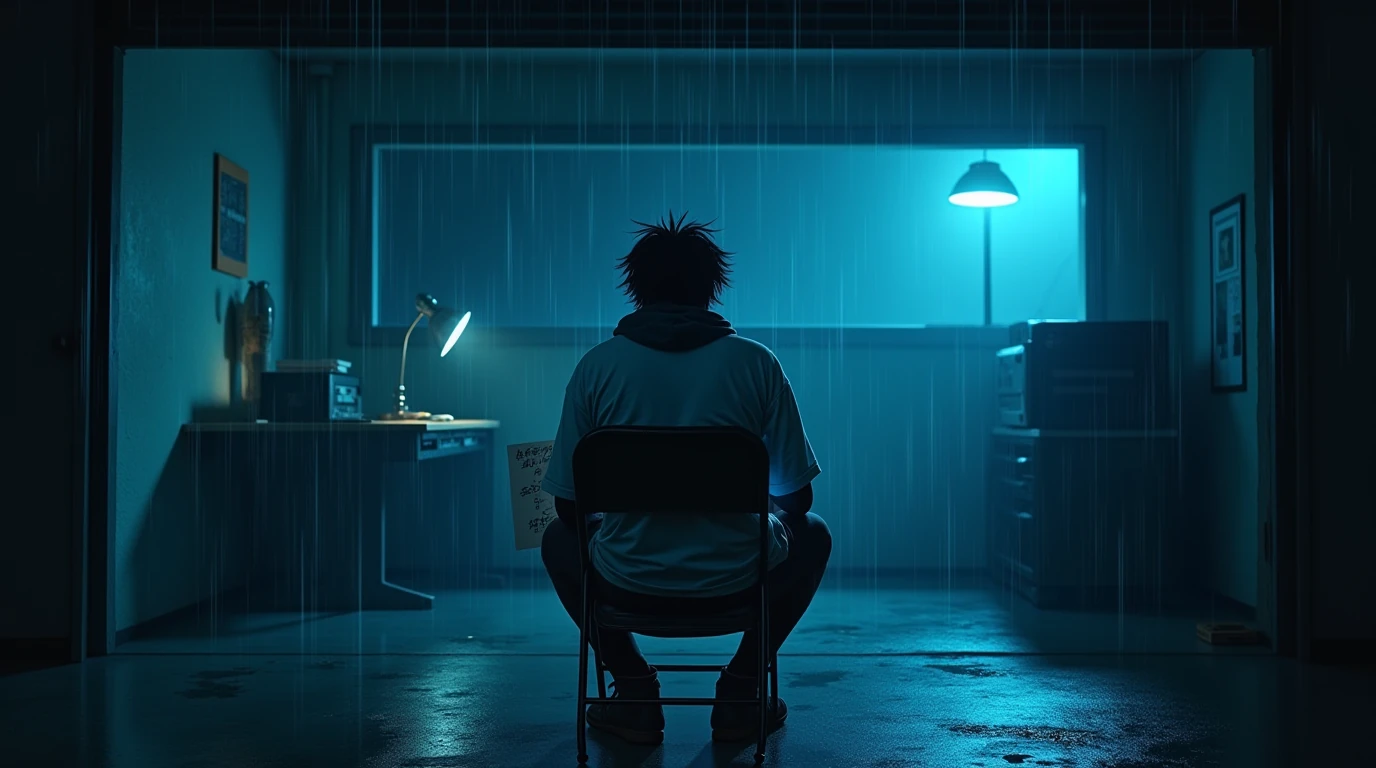
Outside, it started to rain, drumming on the corrugated iron roof like someone knocking on the door. He sat on the folding chair in the garage, clutching the meeting minutes, feeling the world crack open bit by bit.
Not shattered by the truth.
But struck by a terrifying intuition—his father wasn’t a victim. He was an accomplice.