Chapter 4
Daily Routine
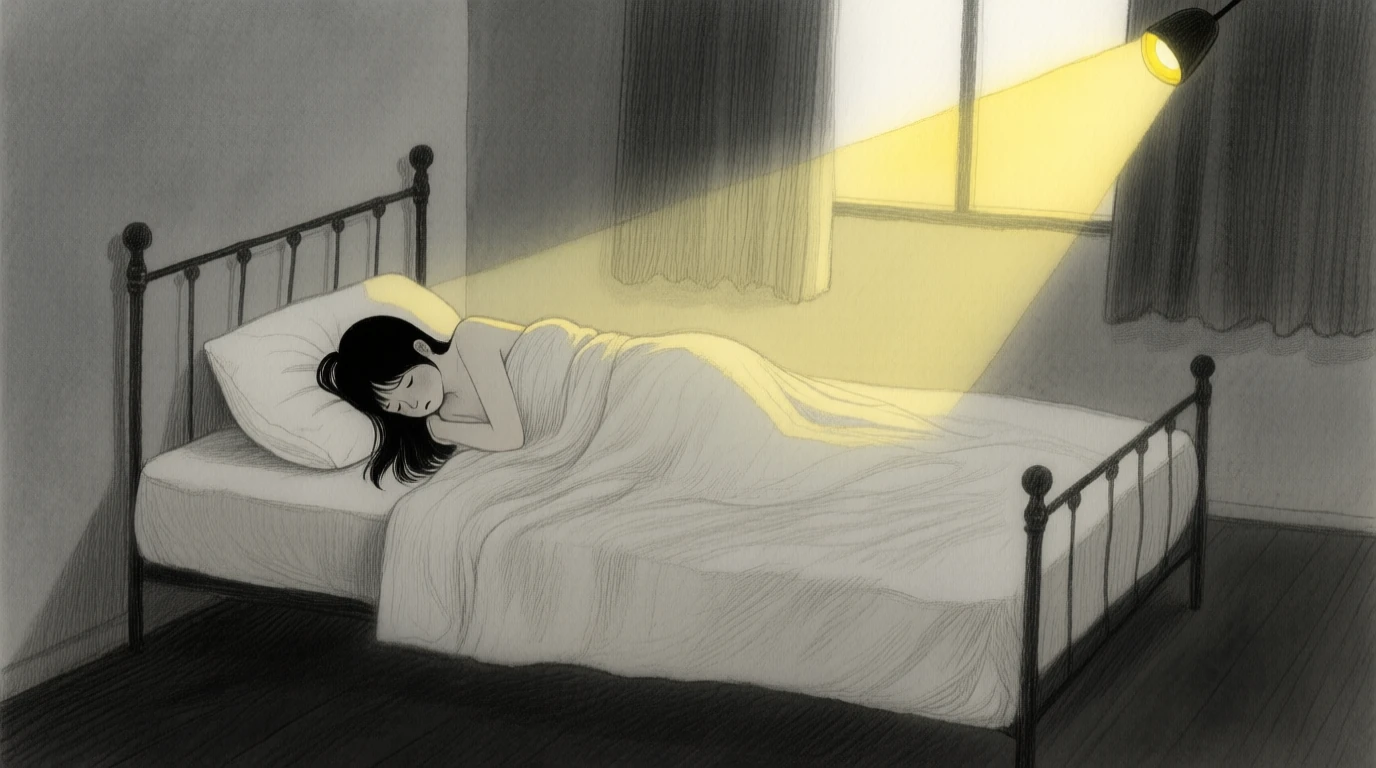
Monday morning at the clinic was quiet.
Yifen sat behind the registration counter, her fingers tapping the keyboard as rows of patient records scrolled across the screen. The faint smell of antiseptic hung in the air, the air conditioner hummed, and the fluorescent lights made the floor gleam a harsh white.
“Registration.”
A middle-aged man in a plaid shirt stood at the counter, setting his health insurance card on the surface. Yifen took it, swiped the barcode, asked for basic info, collected the fee, gave change, printed the receipt. A routine that required no thought—her hands just moved on their own.
“You’re all set. Exam room three.”
“Thanks.”
The man walked in, and the waiting area emptied again. Yifen stared at the blinking cursor on the screen, her fingers hovering over the keyboard without moving.
Last night’s tapping was still stuck in her head.
Three short, one long.
When she got up this morning, Atuo was already awake, sitting at the kitchen table eating breakfast—cereal with milk, spoonful after spoonful, very quiet. She asked if he’d heard any noises last night. He shook his head and kept eating his cereal. His expression was normal. So normal that she started to wonder if she’d dreamed it.
But that knocking had been too clear.
Knock knock knock—knock.
The rhythm reminded her of something—this morning while brushing her teeth, it hit her: the intro to an old song. One she used to love listening to when she was dating Chen Shijie. She couldn’t remember the title, only the rhythm: three short, one long, repeated twice, then the melody.
She shook her head, trying to shake off the thought.
The clinic’s automatic door slid open, and a delivery man in a blue uniform walked in, handing her a manila envelope. She signed for it and opened it—a batch of new office supplies for the clinic: ballpoint pens, correction tape, sticky notes. She tucked them into a drawer and went back to the screen.
At lunch break, she ate her bento in the small kitchen at the back of the clinic. The lunch was leftover fried rice from last night, microwaved at home that morning. She sat on a folding chair, scrolling through her phone as she ate. A friend had posted photos of her kid’s field trip. Another friend shared a cat video. She scrolled past without stopping.
Her phone buzzed.
A message from the after-school teacher: “Hello, Atuo’s mom. Today at the after-school program, Atuo kept talking to an empty seat next to him. I asked him who he was talking to, and he said, ‘No one.’ Just wanted to check if you’ve noticed anything similar at home. Thank you.”
Yifen stared at the message, chopsticks frozen in midair.
She typed a few lines, deleted them, typed again, deleted again. Finally she replied with just one sentence: “He likes pretend play. I’ll talk to him.”
After sending it, she turned her phone face down on the table and continued eating. The fried rice was a bit dry. She took a sip of water and swallowed.
At 6:10 PM, she clocked out and walked to the after-school center to pick up Atuo.
The center was in an alley on the first floor of a building. The steel door was half open, and the noise of children filtered out. She stepped inside and saw Atuo sitting at a corner desk, his backpack already packed, reading a manga.
“Atuo, let’s go.”
Atuo looked up, closed the manga, and stood up.
On the way home, Atuo walked ahead, Yifen behind. Autumn evenings came early—the streetlights were already on, casting a warm orange glow on the asphalt. Atuo’s backpack looked too big for his thin frame, like a shell strapped to his back.
When they passed the convenience store, Yifen stopped and bought a carton of milk and a loaf of toast. Atuo stood by the door, waiting without complaint, just standing quietly.
When she came out, Yifen handed him the plastic bag.
“Here, take it.”
Atuo took it, and they kept walking.
“The after-school teacher sent me a message today.”
“Oh.”
“She said you were talking to an empty seat.”
Atuo didn’t answer. He walked beside her, steady steps, the plastic bag swinging in his hand.
“What did you tell her?”
“Nothing.” Atuo’s voice was calm. “I was just talking to Him.”
Yifen didn’t respond immediately. She looked at the path ahead—some of the paving tiles were cracked, with a few weeds growing through.
“You talk to Him at the after-school center too?”
“He talks to me. I can hear Him.”
“And… can anyone else hear Him?”
“I don’t think so.” Atuo shrugged. “Only I can.”
Yifen slowed down. Atuo kept walking until he reached the apartment building, then turned to look at her.
“Mom, are you coming up?”
”…Yeah, I’m coming.”
She followed him, and they climbed the three flights together. One of the fluorescent lights in the stairwell was broken, flickering on and off, casting shifting shadows on the wall.
That evening, Atuo did his homework while Yifen washed dishes in the kitchen.
Water rushed from the faucet as she scrubbed the pot, scrubbing until the metal squeaked. The TV in the living room was on—a quiz show, the host asking the contestants questions, a contestant getting it wrong, the audience laughing.
“Mom.”
Yifen turned off the faucet and looked toward the living room.
“What?”
“He said you had a really mean patient today.”
Yifen’s hand froze in midair. Water dripped from her fingertips onto the counter.
“What patient?”
“You know… a mean one, wearing plaid, kept asking ‘How much longer?’”
The middle-aged man from this morning. The one in the plaid shirt. He had been rude at registration, asked twice “How much longer?” She’d said “Two more ahead of you,” and he’d clicked his tongue and sat down in the waiting area.
She hadn’t told Atuo about it. She hadn’t mentioned anything about work when she got home.
”…How did He know?”
“He just knows.” Atuo’s voice came from the living room, casual, like he was commenting on the weather. “He said that guy apologized to you later.”
Yifen was silent for a moment. Yes, after his appointment, the man had passed the front desk and said, “Sorry about earlier—I was a bit rude.” She’d said, “It’s okay.”
“Did you tell Him about me?”
“No, He saw it Himself.”
Yifen didn’t answer. She turned back to the sink. The water had gone cold.
When she took a shower that night, she stood under the spray, letting hot water run over her head.
He could see her.
Not just at home—even at the clinic. He knew what patient she’d had, what the patient had said, that the patient had apologized. He was like an invisible camera, following her twenty-four hours a day, recording everything she did.
She turned off the faucet and stood in the bathroom, water dripping from her body, pooling on the tiles.
She dried off, changed into pajamas, and stepped out.
Atuo had already showered and was sitting in the living room watching TV. He was wearing blue pajamas, his hair still damp, a few strands sticking up.
“Atuo, you need to blow-dry your hair.”
“In a minute.”
“Do it now.”
Atuo sighed, got up, and walked into the bathroom. The hair dryer whirred.
Yifen sat on the sofa and picked up Atuo’s communication book. The teacher had written a note: “Atuo’s focus in class today was acceptable, but his science quiz score was unsatisfactory. We suggest you help him review at home.”
She signed her name and put the book back in his backpack.
The hair dryer stopped. Atuo came out of the bathroom, hair dry now, a mess, like a startled cat.
“Done.”
“Go to bed. School tomorrow.”
“Okay.”
Atuo walked into his room, climbed into bed, and pulled the covers up to his chest. Yifen stood at the door, turned off the main light, leaving only the nightlight on.
“Good night.”
“Good night. He says good night too.”
Yifen closed the door and stood in the hallway.
She’d planned a test this morning—deliberately think of something she hadn’t said out loud, and see if Atuo would repeat it. She’d meant to try it at dinner, but Atuo was watching TV, and she forgot.
Maybe she could try now.
She stood in the hallway, closed her eyes, and formed a sentence in her mind.
I want to take a day off tomorrow. So tired. I really want to take a day off. Just one day. Stay home, sleep, go nowhere.
She opened her eyes, walked back to the living room, and sat on the sofa. The TV was still on—a talk show, guests discussing the recent weather. She wasn’t watching, just listening to the noise.
Ten minutes passed. No sound from Atuo’s room.
Maybe it didn’t work. Maybe it was just coincidence. Maybe—
She was about to stand up and turn off the TV when Atuo’s voice came from his room.
“Mom.”
“Yeah?”
“He said you should take tomorrow off.”
Yifen’s heart skipped a beat.
She sat on the sofa, gripping the remote, knuckles white.
”…Tell Him to stop listening to my head.”
Her voice came out louder than she’d intended—loud enough to startle even herself. The living room went silent for a second, the TV host still talking, laughter spilling from the screen.
Atuo didn’t answer.
She stood up, walked to Atuo’s room, and saw a strip of warm yellow light under the door.
“Atuo?”
”…He said He’s not eavesdropping. You were just thinking too loud.”
Yifen stood at the door, her mouth open, wanting to say something but not knowing what. She leaned against the doorframe, closed her eyes, and took a deep breath.
”…Time to sleep.”
“Okay. Good night, Mom.”
“Good night.”
She turned off the living room light, walked into the master bedroom, and closed the door. But she didn’t go to sleep right away. She sat on the edge of the bed, looking at the sliver of yellow light coming through the curtain gap.
Thinking too loud.
So every thought she had in her mind—He could hear it. If she thought it loud enough, hard enough, He would catch it and tell Atuo.
She lay down, pulled the covers up to her chest, and stared at the ceiling.
Fine. Then she wouldn’t think about anything from now on. At home, she’d keep her head empty. Think about things when she was outside.
But she knew that was impossible. How could anyone control what they thought?
She turned over and buried her face in the pillow.
Tuesday.
Yifen took the day off.
Not because He said she should—because she was really tired. She called the clinic, said she wasn’t feeling well, and asked for the day off. The head nurse said okay and told her to rest.
She hung up, lay in bed, and stared at the ceiling.
Atuo had already left for school. She’d walked him downstairs, watched him backpack over his shoulders, cross the alley, turn the corner, and disappear.
The apartment was quiet.
No TV, no Atuo’s voice, no tapping. Just the low hum of the refrigerator and the occasional car outside.
She turned over and pulled the blanket over her head.
But she couldn’t sleep.
She closed her eyes, listening to her own breathing, to the thump of her heartbeat in her eardrums.
She thought of last night’s tapping.
Three short, one long.
She turned over, got up, walked out of the master bedroom, through the hallway, and stopped at Atuo’s door. It wasn’t shut—she pushed it open and stepped inside.
The room was small: a single bed, a desk, a closet. On the desk sat Atuo’s textbooks and pencil case. The covers on the bed were a messy heap.
She stood in front of the closet.
A three-door sliding wooden closet. Old. One of the doors tended to stick. She reached out, grabbed the handle of one door, and slid it aside. The door moved along the track with a faint scraping sound.
The closet was stuffed. Blankets, out-of-season clothes, a suitcase, a few paper bags. She pushed aside the top layer of blankets and peered inside.
Nothing unusual.
She slid another door open. This section held Atuo’s jackets and uniforms, with a few pairs of jeans and sweatpants folded below.
She crouched down and felt the floor of the closet. Wood. Hard. No gaps. She knocked on it. Thump thump thump. Solid.
She stood up and closed the closet door.
Where are you, really?
She stood in the center of the room, looking around. The walls were white, slightly yellowed, with a spiderweb in one corner. The window was small, the curtain beige, the light filtering in making the room look ordinary.
Nothing was off.
But she knew something was there. Not because she sensed it—because she’d deduced it. The things Atuo had said weren’t things a fifth-grade boy could know on his own. Mimi. That mean patient. The thought of taking a day off in her head.
She walked out of Atuo’s room and closed the door.
In the afternoon she went to the supermarket.
Pushing a cart through the aisles, she picked up a carton of eggs, a bunch of bok choy, a block of tofu, a bag of enoki mushrooms. When she passed the snack section, she paused and grabbed a pack of chocolate cookies that Atuo liked.
While waiting in line at the checkout, she noticed a woman ahead of her with a little boy. The boy was maybe three or four, sitting in the cart, clutching a bag of gummy candy. The woman leaned down and spoke to him in a soft voice.
“We’ll eat it when we get home, okay? Not now.”
“Okay.”
The boy obediently put the candy back in the cart.
Yifen watched them without any particular thought. She just stood there, waiting for her turn.
When it came, she placed her items on the counter and pulled out her wallet.
“That’ll be two hundred thirty-eight dollars.”
She handed over three hundred-dollar bills, got change, packed her groceries into a shopping bag, and walked out of the store.
When she got home, she started preparing dinner. Washed rice, cooked it, washed vegetables, cut the tofu. She separated the enoki mushrooms, rinsed them, and put them in a colander.
As she did all this, her mind was blank. Not deliberately empty—she just wasn’t thinking about anything. Her hands moved, her body did what needed to be done, but her brain was like a TV turned off, nothing but a gray screen.
In the evening Atuo came home, and they ate dinner together.
“How was school today?”
“Okay.”
“Your science quiz score wasn’t great—the teacher wrote in the communication book.”
“Oh.”
“Do you want me to help you review?”
“Nah, I can study on my own.”
Yifen didn’t push. She picked up a piece of tofu with her chopsticks and ate slowly.
“Mom.”
“Yeah?”
“He said you opened my closet this afternoon.”
Yifen’s chopsticks froze midair.
”…How do you know?”
“He told me.” Atuo looked down at his rice, his tone matter-of-fact. “He said you opened my closet, looked inside, and then closed it.”
She didn’t speak. She put down her chopsticks and took a sip of water.
“Tell Him… to stop watching me.”
Atuo looked up at her.
“But He’s always here. Of course He can see what you’re doing.”
“I know, but—”
She stopped.
But what? She didn’t know.
“Forget it. Eat.”
She picked up her chopsticks and continued eating. Atuo said nothing more.
Before bed, Yifen went to Atuo’s room to turn off the light.
Atuo was already lying down, covers pulled to his chest, eyes bright, still awake.
“Mom.”
“Yeah?”
“He asked why you never talk to Him directly.”
Yifen stood at the door, her fingers on the switch.
”…I don’t have anything to say.”
“He said that’s okay. He’s fine just listening.”
Atuo’s voice was calm, as if he were relaying a trivial fact. He rolled over, turning his face to the wall, his voice a little muffled.
“He said you don’t have to be afraid of Him. He said He’s not trying to do anything. He’s just here.”
Yifen didn’t answer.
She turned off the light, closed the door, and stood in the hallway, her back against the doorframe.
She took a deep breath.
She closed her eyes and felt her heartbeat in her chest—one, two, three.
He said He’s not trying to do anything.
He’s just here.
She opened her eyes and looked at the window at the end of the hallway. The streetlight outside cast a patch of yellow light on the floor.
She walked back to the master bedroom, closed the door, and sat on the edge of the bed.
The apartment was quiet. The hum of the refrigerator, the occasional car outside, the sound of her own breathing.
She sat there, not moving.
Then she heard a sound.
Very soft, coming from the direction of Atuo’s room—not tapping, but Atuo talking. The voice was small, the words unclear, but the tone was steady, like he was chatting with someone.
She didn’t get up to check.
She just sat there, listening to Atuo’s voice, to that steady tone, in the quiet night, like a thin thread flowing out from under the door.
She lay down, pulled the covers to her chest.
She had work tomorrow. The after-school program fee was already paid. There were still leftovers in the fridge—she could stir-fry something for a packed lunch.
She closed her eyes.
Atuo was still talking. The voice was very low—she couldn’t make out the words, but she could tell he wasn’t scared. The tone was calm, like he was chatting with an old friend.
She turned over and buried her face in the pillow.
She didn’t fall asleep. She listened to that voice, listened, until it stopped. The apartment fell silent again.
Then she heard Atuo say one sentence, clear enough for her to catch.
“He says good night.”
She didn’t answer.
She lay there, eyes open, staring at the ceiling in the dark, until the light from the curtain gap shifted from yellow to white.